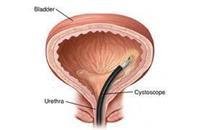
The prostate gland is located below the bladder, and it works to produce the semen. Enlarged Prostate is a health condition that affects the prostate gland in men and causes it to slowly grow with age.
Most men develop an enlarged prostate with age, and usually do not cause any symptoms before the age of forty, but after the man reaches the age of 45 the symptoms begin to appear.
The main cause of an enlarged prostate is not known and has not been identified yet. However, this problem is not classified as a type of cancer.
Symptoms of an enlarged prostate
Having an enlarged prostate is associated with some different symptoms, which are
1- The need for frequent and frequent urination
A persistent and frequent need to urinate, especially during the night hours, can be a sign of an enlarged prostate.
This is caused by the pressure of the prostate on the urethra, due to its large size, which is the tube that carries urine out of the body.
The bladder needs to contract more in order to excrete the urine through the urethra, so the extra pressure on this tube from the prostate causes the bladder to contract even though it is empty.
2- Difficulty urinating
As a result of an enlarged prostate, the task of urination becomes more difficult, as it takes longer to start the flow of urine, and it may also be weaker than before. It may be accompanied by a feeling that the bladder will not be completely emptied after urinating. This symptom is the result of pressure on the urethra, which makes it narrower, forcing the bladder to double action to get rid of urine.
3- Not being able to urinate
This happens when the prostate becomes large, causing the urethra to be completely closed, or as a result of a weakening of the bladder muscles as a result of its stress. This is one of the most serious symptoms of an enlarged prostate, as it can cause kidney damage and other real problems in the body.
Treating an enlarged prostate
Treatment for an enlarged prostate includes various parts, which are as follows
1- Waiting
In case the symptoms are mild or moderate, the doctor may advise you to wait while observing your health condition.
If your symptoms do not get worse, your doctor will not offer you different treatments.
2- Lifestyle changes
Your doctor can advise you to make some lifestyle changes, and the most important tips include:
Avoid alcohol and caffeine
Drink an appropriate amount of water distributed throughout the day
Avoid drinking water before bedtime
Empty the bladder when urinating, then wait a little and try again
Relax
Exercise regularly.
3- Medicines
In some cases, your doctor may prescribe certain medications to treat the problem of an enlarged prostate and its associated symptoms. These medications depend on the symptoms you are experiencing and their severity.