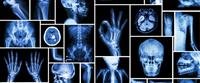
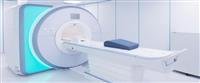
X-rays are energy distributed in a specific space, and the spread is in the form of waves, and it has several sources, such as the sun and some types of devices, and that radiation is one of the medical methods used in detecting an individual’s disease, and so there are a number of rays, Each type of this radiation has a job to perform. Types of regular rays: Also called x-rays or ionizing rays, these rays are used to detect the presence of fractures in one of the bones of the human body, and this type gives a normal image, printed on a film board, and the size of the film is proportional to the part that was photographed, when it is projected onto The body, the body absorbs, and the larger the organ, the greater the absorption. After these beams come out of the body, they fall onto the piece of the film and burn it, showing us the injury to the exact shape. Chromosomal rays: Also called colored rays or metaphor rays, and in this type of radiation, where the patient is injected with a water-like liquid where the liquid is rich in iodine, or a milk-like liquid that is rich in barium, and the patient can take this fluid through the mouth, as well as This fluid prevents the penetration of radiation into the body, and therefore images of white pigment appear in the body, and this type of radiation is very similar to drawing shadows, and it should be noted that they are used to photograph the veins, the urinary system, the kidneys, and the uterus, where these areas are injected directly into the liquid Also, cleaning the body from its liquid is through urine. Sliced rays, which are used in this type of x-rays, are used to detect injuries and diseases in some parts of the body, such as: the abdomen, neck, spine, and chest, in addition to the small parts that are widespread in the body, such as the supra-nucleus, pituitary gland, Also, this type of imaging helps to detect the presence of bleeding in both the chest and abdomen, and in some cases imaging body parts, especially the chest and abdomen, and provides the patient with the colored substance by mouth, and by intravenous injection. Ultrasound, and this type of radiation depends on ultrasound, where these waves are directed in the body, with varying frequencies, and their frequency is recorded with high sensitivity devices. Magnetic resonance radiation, through which parts and organs of the body are imaged in small sections, through a sectional device designed for this type of radiation, and is used to detect soft tissues in the breast, uterus, brain, spinal cord, and gallbladder channels, as well as Joint ligaments. Interventional radiation. Atomic scanning rays.
This content is for health education and does not replace a consultation with a doctor.