
The Jeddah Diwaniyah continues its bidding with a valuable lecture by Dr. Walid Fitaihi on the harms of smoking EliteDoctorOnline Jeddah-Ahmed Sharaf Al-Din .. Jeddah Diwaniyah was able, within a short period of time, to occupy a prominent social position and to be admired and appreciated by followers and followers, and the desire of Sheikh Khalid bin Abdul Latif Al-Fawzan and Sheikh Imad bin Abdul was fulfilled God Almightyb from establishing it as an elegant, unique and useful diwaniyya through its unprecedented presentation of many issues of concern to society through weekly lectures ed for a constellation of scholars, specialists and officials to offer everyone a distinct model of purposeful social councils, specialized discussions and realistic experiences through which some behaviors harmful to the individual and society are addressed. She explains, by word, image, experience, and experience, how to modify the path for the better and more beneficial, and ways of prevention from the reality of the Qur’an and the pure Sunnah.
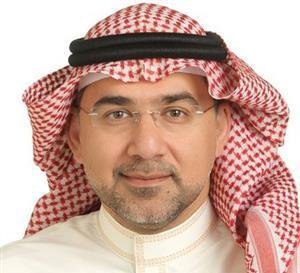
The Jeddah Diwaniyah had an important date with a lecture worthy of follow-up by Ibn Bar from the people of the Kingdom of Saudi Arabia who was able to forge his way with knowledge and knowledge and fortify his life with the Holy Qur’an and the biographies of the Companions and followers .. It is Dr. Walid bin Ahmed Hassan Fatehi, who was presented by Sheikh Khalid bin Abdul Latif Al-Fawzan to the pioneers of Al-Diwaniyah After the opening with the Holy Quran.
Dr.. Walid Ahmed Hassan Fitaihi, Chairman and CEO, and a consultant of internal diseases, endocrinology and diabetes at the International Medical Center in Jeddah.
He holds a bachelor''s degree in engineering and systems analysis with first honors, and the first in the graduating class from George Washington University - Washington DC - USA in 1987.
Graduated from George Washington University School of Medicine - Washington, DC - USA, Doctor of Medicine, in 1991.
He specialized in internal diseases at Harvard Medical School affiliated hospitals and obtained the American Board of Internal Medicine 1995.
He received the American Fellowship in Endocrinology and Diabetes from the Teaching Hospitals of Harvard Medical School and obtained the American Board in Endocrinology and Diabetes 1999.
He received a master''s degree in health law and administration from Harvard School of Public Health in 1999.
He worked as a faculty member at Harvard Medical School and as a consultant in internal diseases, endocrinology and diabetes at the Joslin International Diabetes Center in Boston, and as an administrator of the program for managing and treating diabetics in intensive care and open heart operations at Deaconess Hospital affiliated to Harvard Medical School 2000-2002.
Founder, Chairman and CEO of International Medical Center Hospital, Jeddah, Kingdom of Saudi Arabia.
Member of the Board of Directors of Dar Al Fouad Hospital in Egypt.
Member of the Board of Trustees of the Saudi Commission for Specialties.
Vice Chairman of the Board of Directors of the Saudi Institute for Health Services.
Member of the Board of Directors of Ahmed Hassan Fitaihi & Partners Company.
Member of the Board of Trustees of the Islamic Society of Boston.
Member of the General Assembly of Okaz Foundation for Press and Publishing.
Deputy Editor-in-Chief of "Your Health Today" magazine.
He has many participations in teaching, medical conferences and symposia and has important scientific research published in international medical journals.
He has literary posts in newspapers and magazines, and a weekly column in Okaz newspaper.
He contributed to representing Islam and defending Islamic issues in the various American media outlets after the events of September 11th, and gave dozens of lectures in American universities, churches, temples and government departments.
Dr. Walid Fitaihi began his valuable lecture. Smoking is a bad habit that is difficult to get rid of, but getting rid of it is possible and not impossible. There are more than 4000 chemical compounds in smoking substances, including many carcinogens, such as formaldehyde, acetone, nickel, nitrosmin and cyanide, and there are many diseases caused by smoking, and their incidence in smokers is higher than cancer, which are cardiovascular disease as well as lung diseases and stroke. Smoking has negative effects on most parts of the body, even the skin and hair. This is for health effects, but there are other important effects such as social, psychological, economic and environmental effects. When the smoker decides to quit smoking, the positive effects begin to appear within the first 20 minutes of quitting smoking. During this period, the following occurs:
Blood pressure returns to normal.
Heartbeat returns to its normal level.
The temperature of the hands and feet returns to their normal level.
After 8 hours, the following occurs
The level of carbon monoxide in the blood s to the normal state.
The level of oxygen in the blood rises to its normal level
After 48 hours, the following occurs
Fingers get used to the absence of nicotine and work better.
Improved taste and smell.
But after 27 days, the following occurs
The bronchi relax, and breathing improves.
Increased lung ability to function normally.
From 2 to 3 months the following will happen
The blood circulation improves.
Walking becomes easier.
Increased lung function improved by 30%.
3 to 9 months the following happens
Coughing, sinus congestion, lethargy and difficulty breathing are significantly reduced.
Respiratory capillary growth that reduces inflammation in general.
Body energy in general is increasing.
After a year, the following happens: The risk of heart disease decreases to 50% compared to non-smokers.
After 5 years the following will occur
The likelihood of developing heart disease returns to the normal level in non-smokers.
The risk of lung cancer is 50% compared to non-smokers.
After 10 years the following will happen
The probability of developing lung cancer returns to the normal rate, i.e. non-smokers
The cells that might cause cancer are ed and switched.
The possibility of developing cancers other than lung such as mouth, larynx, pharynx, urinary bladder, kidney and pancreas cancers reduce to a normal level as non-smokers.
And Dr. Walid Fetaihi went on to say there is no doubt when Christopher Columbus discovered America, he did not know that he opened one of the most dangerous doors for a discovery that humanity will suffer from and becomes an epidemic throughout the ages, which is tobacco. Invincible. Dr. Ashraf Abdel Gayoom Amir, Consultant Family Medicine and Director, Physician, International Medical Center Hospital in Jeddah, with us in this meeting to reveal the efforts and fierce wars to stop the growth of this genie and reduce the risk of deadly smoking.
And after Dr. Walid Fitaihi presented many important documentary films that illustrate and demonstrate in word and real-life the seriousness of the harms of smoking ... he began to answer the questions of the attendees, which were sufficient to cover all aspects related to smoking harms
Tobacco was discovered 500 years ago, and although the beginning of the fight against smoking took place nearly 400 years ago, we did not see it at its peak except in recent years .. What is the reason?
Today we are in the process of discussing a topic that is considered one of the most important topics of the day and is of interest to societies in general and our Saudi society in particular. Anti-smoking has become more realistic and clear at the present time for several reasons, including the high percentage of health awareness among individuals, which came as a result of all efforts made at all levels of government and ministry Health and the private and public hospital sectors, and the keenness of many doctors and their adoption of this issue as a personal issue and their intensification of efforts out of their concern for the health of individuals, studies have shown that the doctor’s concern for the health of community members and raising this problem among smokers helps to quit smoking at high rates, for example when the doctor inquires From the patient, if he smoked, stopped, or tried to quit smoking, this is guaranteed to raise the rate of control success to 7%. The other factor is the emergence of health problems, which have become the first threat to society, including infectious diseases, tumors, and functional impairment of some organs such as the respiratory system and others. These factors led to the presence of this tremendous momentum for the issue at this stage and became one of the biggest concerns.
Despite the attempts, we find a failure that still exists .. Did the weak capabilities of control efforts and the lack of sufficient competencies lead to failure in the confrontation, or the strength and efficiency of tobacco companies in their ability to penetrate and change the rudder is the reason?
In my opinion, no matter how much these companies have reached in their capabilities and support for their products in the production of tobacco of all kinds, here the issue becomes the issue of the consumer in the first place and his conviction that smoking is one of the first reasons leading to the deterioration of his health, as it will lead to his initiative to improve his condition. On the other hand, the entire health system has a great role to play in combating smoking. However, despite these capabilities, there is still a low rate of control, and this has to do with several variables such as health awareness, behavioral and social status, and the psychological composition of the individual and society, and until now the problem of smoking is still associated in our society with some behaviors, including that when the young man enters the stage of adolescence he appears Because smoking is one of the traits of manhood. The efforts exerted are good and have reached fair proportions, but I expect that these efforts will be intensified in a serious and scientific manner in light of the treatment methods that have been developed in the field of combating smoking, which will have greater effectiveness and success, God willing.
We find that a simple change in any workplace (such as changing departments in companies or ministries) may change from allowing smoking to banning it? Does the absence of a decisive law on the part of the authorities lead to weak control?
Of course, there must be strong and strict laws and regulations that apply to smokers through which they protect the surrounding individuals and the individual smoker himself, and it is no secret that developed countries have made great strides in this field by enacting strict laws in workplaces and even public places and determining places to sell tobacco and taxes. The high rate led to a decrease in smoking and smoking rates.
Commenting on that .. Is it not strange that there is a relationship between smoking and poverty?
Smoking, as I mentioned, has a relationship with psychological and social aspects, and even economic backgrounds such as a low standard of living, which d the process of smoking as a habit linked to psychological pressure, which made this matter the only outlet for an exit from psychological pressure. With regard to the economic aspect, this matter has led to the resort to poor brands of tobacco and others, which increases its risk.
What about rich countries like Saudi Arabia and the Gulf?
Here individual and social behaviors rule, and many individuals are convinced that smoking is not dangerous. This is the first stage when we try to help the patient or the smoker by transforming him from an unconvinced patient to quit into a convinced patient.
There are many methods used to quit smoking, such as chewing gum and paste..Do they have any effect? Is acupuncture as successful in treating smoki