
than thirty minutes
Many doctors resort to cardiac catheterization because it is the best and last solution that enables the treating doctor to see the coronary arteries and the extent of their impact and to develop the best treatment strategies depending on the situation, as cardiac catheterization is usually performed without resorting to general anesthesia, and all that is needed is to give local anesthesia in an area The joint of the hand, elbow, or groin, and the doctor s a catheter from an artery in the arm or into the groin (upper thigh), and from there to the aorta (aorta).
All that the patient feels is prick the needle only, and pushes the catheter until it reaches the aorta under radiological observation, and then enters the catheter in the orifice of the coronary arteries, where a dark substance (colored dye) is injected to visualize the arteries, then the catheter enters the left ventricle to visualize this ventricle .
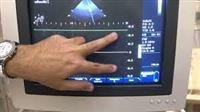
The patient may feel a passing temperature in the chest that spreads to the rest of the body, during the injection of the contrast medium, but this feeling quickly disappears within moments. The patient can watch everything that is happening on a TV screen that directly displays the patient’s arteries and heart.
After removing the catheter from the artery and pressing on the artery for at least 10 minutes, the patient should rest his arm or leg where the catheter was performed for several hours after the catheter.
After that, the patient can leave the hospital if he so desires because there is no damage from that. That is why daytime catheter units have been established, where the patient is admitted on the first day of the day and discharged to his home at the end of the day.
Cardiac catheterization is not usually performed unless the doctor feels that it will give important additional information in the patient''s treatment plan. Cardiac catheterization is a basic examination to decide whether the patient needs a balloon expansion of the coronary arteries, or for a scientific link to the heart arteries, as the catheter may be diagnostic and therapeutic at the same time.
As for cardiac catheter problems, they are very rare, as bruising may occur at the site of the catheter ion in the groin, or the pulse in the forearm may become weak in rare cases. The patient may need to rest the forearm or leg where the catheter was performed for several days.
Coronary artery catheterization does not usually take more than thirty minutes. As for its risk, it is much less than people imagine, as it does not exceed one in a thousand at most. This risk is closely related to the severity of stenosis in the coronary arteries. In return, it is of great benefit, as cardiac arteriography is the only direct way to see the coronary arteries of the heart, and there is no substitute for it, and the only way for a final diagnosis of coronary heart disease, and thus to determine treatment with drugs or by surgery, and the only way to see these arteries respond with the appropriate treatment Especially after ballooning the arteries.
Dr.. Muhammad Kurdi
Consultant of Internal Medicine, Cardiology and Catheter Intervention
Dr. Sulaiman Al Habib Medical Center