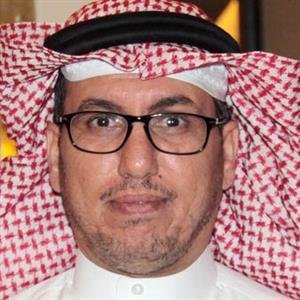

The Executive Director of the King Abdullah International Medical Research Center in National Guard Health Affairs, Dr. Muhammad Al-Jumah, revealed The use of molecular biotechnology in the field of genetic diagnosis has opened new horizons in understanding the causes of many diseases, their mechanism of action and their pathological effects. "The importance of this use has increased steadily since it began to be used in the medical diagnosis of some diseases whose causes and pathogenic mechanism have been identified when the genetic material is exposed to an influential genetic mutation," he told "Sabaq".
Dr. Muhammad Al-Jumah added that despite this progress, many diseases in medicine have either unknown or unclear causes. Therefore, the idea of preserving the human vital materials, whether those that have been purified, such as genetic material, or that are still in human cells in the form of tissue or a biological fluid such as blood, for example, has emerged as an urgent need in what is known as biobanks.
Dr. Al-Jumah said that the main goal of these banks is to provide them for studying diseases in the future, especially that many patients die before knowing the pattern and behavior of the diseases they contracted. Therefore, it can be said that saving vital materials from patients is tantamount to preserving the hidden features of the disease and not removing it once the patient himself dies, and thus working to find treatment and preserve the lives of those who contract it in the future.
Dr. Al-Jumah said: The benefits of the biobank can be redeemed by a number of points, the most prominent of which is preservation of different samples from the donor or patient, which means that the disease can be diagnosed in the future when the diagnosis cannot be made in the event of donation. And the ability to know the nature of the behavior of diseased cells and compare it to the nature and behavior of healthy cells. And linking the genetic and molecular patterns, whether pathological or non-pathogenic, and the extent of the difference between these patterns compared to other peoples.
He pointed out that the biobank of the King Abdullah International Research Center consists of incubators that preserve the four blood contents, which are white and red blood cells, blood plasma, blood serum and samples of other body fluids such as saliva and urine. The bank aims to preserve the vital contents of 200,000 donors.
Dr. Al-Jumah pointed out that the vital banks will optimistically provide great services to the human being in preserving his health and treating his incurable diseases, which is what we expect in the foreseeable future, but this optimism must be surrounded by a fence of concern and care and take responsibility towards preserving these vital banks, and an ambition with hope With the participation of our researchers in this fertile scientific field, especially when it is at the beginning of the road.
He explained that the genetic material bank technology, which is a technique that mixes medical genetics and biotechnology, through a special device that was introduced to the Saudi Biobank, to extract the genetic material from blood samples, and store it in the DNA Bank at a temperature of 20 degrees below zero. And for a period of up to twenty years.
For his part, the head of the medical technology department at the King Abdullah International Medical Research Center, Dr. Ibrahim bin Barjas Al-Abdulkarim, stated that the technical specifications for this technology and the necessary steps for it to extract the genetic material were developed by the center, and were discussed, developed and then presented to a number of advanced companies in the fields of technology Biomedical until an agreement was reached with one of the advanced international companies that showed willingness to work with the center in developing and manufacturing this technology.
He said that this technology has been introduced for trial operation in the center, and it became clear during this experimental stage of the technology that it has high quality of extracted DNA and great efficiency in the performance of the devices that make up this unique technology that is currently being worked on in the center''s laboratories.