organ donation
The National Committee for Donation and Organ Transplantation in the UAE opens the door for registration next summer to donate after death.
Dr. Ali Al-Obaidli, Chairman of the National Committee for Donation and Organ Transplantation in the UAE, said, during a study conducted, that 68% of the Emirati community supports organ donation after death. This reflects the culture of giving and a sense of responsibility and spreading the spirit of goodness among people for those who suffer from a defect of their members, indicating that the summer period will witness the opening of registration for those wishing to donate organs after death, in addition to that the "Zayed Charitable Marathon" will support the spread of the culture of organ donation.
Pictures .. Abu Dhabi hosts the largest awareness workshop for organ donation in the Emirates
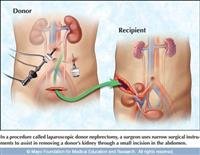
Al-Obaidli explained during the largest awareness workshop on organ donation in the UAE, organized by the "Sehha Company", in cooperation with the National Committee for Organ Transplantation at the Ministry of Health and Community Protection, Cleveland Abu Dhabi, the Department of Health, and a number of government agencies, that organ transplantation began in the UAE in 1985. , And it was confined to kidney transplantation.
He added that after the 2016 law on organ transplantation was activated, 6 donors donated their organs after their death, and 19 people were saved through these organs, including 13 people inside the country, and 6 people in Saudi Arabia, in accordance with the unified Gulf procedures that allow organ donation. Among the Gulf states. He pointed out that less than 1% of the deceased are those who donate their organs after death, and that 99% and more do not allow them or their relatives to donate organs, pointing out that the cases of donation among the living are the most, although a single donor after death can contribute Save 8 people.
Dr. Faisal Abdul Rahim Shaheen, Consultant of Internal Medicine and Nephrology, Director General of the Saudi Center for Organ Transplantation, revealed that the success rate of kidney transplantation has reached 98%, and that it reaches about 100% in children, and 98% in the middle-aged and the elderly, if the donor is a relative, It ranged between 95 and 92%, in case the donor was brain dead.
He explained that about 120 to 140 people, out of every million people, annually need a kidney transplant, especially since natives to kidney transplantation perform only 10% of their functions, indicating that kidney transplantation is the highest among transplantation of the rest of the body, as the patients who need Their numbers range from 10 to 20 people out of every million people annually, while the number of people in need of a heart or lung transplant ranges from 1 to 2, out of every million people.
He pointed out that diabetes, blood pressure and obesity are among the most common causes that lead to kidney failure (kidney failure), indicating that 25% of the Gulf region''s population has diabetes, and that 15% of these patients are at risk of developing kidney failure, as a result of not adhering to treatment. He pointed out that the percentage of people with blood pressure in the region reaches 20%, and that the problem of Arab societies is that they do not believe in the disease until after the case reaches a late stage.
Shaheen emphasized that the Arab region imports corneas in large numbers, and that spreading the culture of organ donation after death completely obfuscates us from this import, especially since the cornea does not distort the body of the deceased from abroad.