address heart disease risk factors in Saudi Arabia
Heart disease and its financial costs that weigh down the budgets of countries are one of the main challenges facing decision-makers in dealing with these diseases by developing a proactive system to reduce the risk factors whose availability within the local community leads to the occurrence of these diseases among individuals and their increasing spread, and Saudi Arabia was among the most Countries in the Middle East and the Arab Ocean that have paid special attention to the development of infrastructure by establishing and developing advanced medical centers in the field of cardiac medicine and surgery, and has recently become a treatment destination for many patients regionally and internationally.
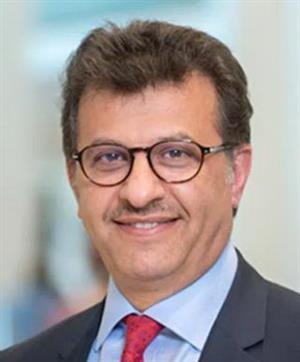
However, Dr. Hani Kamal Najm, head of the cardiac surgery department and vice president of the King Abdulaziz Center for Cardiology and Cardiac Surgery and Vice Chairman of the Saudi Heart Association, believes that the health facilities system in the country lacks a proactive infrastructure to face the increasing risk factors in the Saudi society, which lead to an increase The number of people with heart disease locally, stressing that the current facilities do not take into account the satisfactory distribution geographically, as it depends only on population density.
According to Najm, the absence of surveys has led to a quasi-random distribution of heart centers in Saudi Arabia, considering that the expansion of the health cities in the Kingdom did not take into account the operational dimension of the heart centers in those cities, which will constitute a burden on the decision-maker in the country in the future.
Many issues related to heart medicine and surgery and health strategies in Saudi Arabia were the focus of "Asharq Al-Awsat" conversation with Dr. Hani Negm .. So to the text of the dialogue
What are the most common heart diseases in Saudi Arabia?
Atherosclerosis diseases in adults are one of the most common heart diseases, and behind their spread is a number of risk factors, on top of which are high blood pressure, high cholesterol, and smoking, in addition to the family history, in terms of early, not late, atherosclerosis diseases, and I mean here Cases of stroke at an early age, such as infection in the thirties and forties, and atherosclerosis is considered a disease of the age and it is the largest cause of death for both male and female sexes, and this disease constitutes a high cost in government spending budgets due to the high cost of treatment, because it depends a lot on factors Different dangerous and difficult to avoid.
In addition to other heart diseases, including cardiac rheumatism, which is in second place in terms of prevalence in Saudi Arabia, as well as congenital diseases that spread among children locally.
How do you find the medical services provided in Saudi Arabia to combat heart disease?
Health services directed to the field of cardiology in Saudi Arabia are - and praise be to God - very advanced medical services, compared to what is the case in neighboring countries, and they even surpass many of the medical services provided in Western countries, but the current distribution of these services in the country is not commensurate with the population distribution Linked to the spread of the disease geographically, and I believe that the expansion of the Kingdom''s establishment of healthy cities and the medical centers attached to them to serve heart patients need to take into account the geographical distribution of the spread of the disease, and that the health strategy is based on the basis of avoiding the disease and not treating it in late cases. .
Meaning that there should be proactive steps to confront risk factors and control them, and the problem of the heart in the Kingdom does not lie in treating heart patients but in preventing and preventing heart disease, as risk factors are widely spread locally, there are problems of the spread of diabetes, and it has become known to everyone. That one in four Saudis suffers from diabetes, as well as the situation with high blood pressure, high cholesterol, smoking, dietary habits, the spread of obesity, and the absence of the sports side of the daily life of the individual are all factors that cause heart disease, and what is really lacking are the centers and infrastructure for control. On the risk factors, through community education, which is the health policy in force in Western countries, which was able to reduce the curve to measure the number of heart disease among its citizens, by controlling the risk factors in order to be able to reduce heart disease.
Is there a conviction on the part of the decision-maker of the health situation in Saudi Arabia to adopt your idea that you mentioned about proactive solutions to limit the spread of heart disease locally?
It is important for decisions to be based on proven international studies. Likewise, health strategies must be implementation strategies. I believe in the Kingdom, we have primitive executive systems, meaning is the smoker who breaks the rule and the law really can impose a fine on him, through one of the citizens submitting a complaint? Against those who violate the smoke-free law in places where smoking is prohibited locally, there are laws and rules that appear on the surface, but they are not enforced with fines, and so far the young boy can still buy three cigarettes from the grocery store without the seller being held accountable, the executive side is absent The most prominent in all of our health strategies, in addition to the absence of community health education.
All international and international studies talk about the necessity of having lines of defense represented by precautionary measures and combating risk factors, and that pre-emptive process does not take place without proper health education, but many studies talk about the failure of the awareness message to properly reach members of society.
There must be a maturity in dealing with community health awareness, and we are still in the Saudi Heart Association and in general, we have not communicated sufficient information to the recipient.
There are many reasons behind this, and we in the Heart Association and through our participation with the Saudi Ministry of Health, we worked to implement educational campaigns, and these campaigns need financial support, and it is difficult to find a sponsor for such campaigns, despite our readiness through our possession of the scientific and specialized infrastructure in the field of medicine. the heart.
In addition, the language used in the delivery of educational material to members of society must correspond to the cultural and cognitive dimension of the individuals, in addition to the necessity for a dramatic output at the level of the educational product presented during this message.
These messages must provide information about the risk factors that result from the practice of smoking or not exercising on the health of a person and their direct damage to the health of his heart, and we see the consequences of the health behaviors that a Western person takes in his daily life, so we find that the individual of them reaches the age of eighties And the nineties, they are enjoying good health to maintain their health through a package of positive practices in their daily lives.
I think that it is very important to have a way to convey the information in a positive and correct way, and we had a project by presenting short film visual scenes that do not exceed 30 seconds, presented through satellite channels, as a kind of educational message, but unfortunately this project did not activate, but rather we presented an integrated project For health education through the association of the Saudi Ministry of Health, and the cost of that project was estimated at 3 million riyals, but they answered our project submitted to them that they would search for a financier and sponsor for the project, and the project went unheeded.
Are you blaming the Ministry of Health for not activating your educational message project?
Unfortunately, and through my work in committees working under the umbrella of the Saudi Ministry of Health, I have become convinced that I have recently formed my refusal to work in these committees, and the reason is that the committees only present words and projects on paper without implementation, and I look forward to the presence of Dr. Abdullah Al-Rabiah at the head of the hierarchy of the ministry That this method of work of the committees be changed, and that their work is not limited to making recommendations without having any effect on the ground.
Returning to the idea of the proposal submitted by me to the Health Services Council and my vision regarding the distribution of heart centers in the country, taking into account that we have a strategic study of need and not based on population density.
It is noticeable now that the distribution of medical centers specialized in treating heart diseases in Saudi Arabia is disproportionate, and the reason here is complex and cannot be attributed to one reason. First, in general anywhere in the world, it is normal for centers to be established in cities with a large population, but it must be followed by a spread For centers in other places, and now the Ministry of Health has begun building medical cities and most of these cities have heart centers, but the problem that you will face in the future is that it is easy to give the contractor millions of riyals to build a heart center, but operating the center is the biggest problem.
Indeed, the existing centers in Saudi Arabia did not address the number of expected diseases in the country, meaning that for every million people in western countries, North America, there are approximately 1000 heart operations, and in Europe 800 operations per million people, and if we apply these measures to Saudi Arabia, we have 20 million people. It is expected that there will be 20 thousand heart operations that must be performed in the Kingdom, and we will not be like Europe, so we say 500 patients per million, and we now with all our existing centers have not reached 10 thousand operations in the Kingdom, the total of our operations does not exceed 6 to 7 thousand operations per year And the number of governmental and private centers we have 16 centers, and the problem is that there is a heart center that offers two operations per month, so can we call it a heart center, and today we are only in the King Abdulaziz Center for Cardiology in the National Guard we have performed 6 heart operations, and this is normal in one day Regarding the center here, but there are other heart centers in Saudi Arabia that only perform 3 to 4 operations per month, or nearly 40 operations per year. We have two problems, the first of which we do not have the ability to diagnose everyone who suffers from heart diseases, and those who have heart diseases and need intervention Surgical, and We notice that there are patients who come to the center in the late stages of his heart disease, after there is a complete decline in heart function, and if there is a health system in the country, the disease will be discovered by the family doctor, by following his health and disease history. , So that it can be transferred in the event of an early need for a heart center locally, and the chances of success are greater in avoiding many of the health problems and crises related to heart disease in this way.
For your information, diabetes for ten years medically means heart disease, so any patient who has suffered from diabetes for ten years must do a heart examination, and in the event that he does not perform an examination on his heart, the possibility of problems and diseases in his heart without his knowledge is possible.