Health scientific societies lack communication with the "decision maker" .. Dr. Al-Omair: "The Liver Association" seeks to launch an integrated national program in cooperation with the Ministry of Health Dialogue - Muhammad Al-Ghanami, a consultant in liver diseases affirmed that health associations in the Kingdom lack the role of communication and interaction With the health decision maker, cooperating with him, and working under his umbrella to develop all health plans and programs according to specialization, indicating that making the desired role as well as developing it needs many reforms expected from health decision-makers, and any attempt to activate and motivate all members of associations from doctors and health practitioners to respond and interact with these plans and programs Still waiting for this connection to materialize.
The President of the Saudi Society for Liver Diseases and Transplantation, Dr. Ahmed bin Omair Al-Omair, in an interview with "Riyadh" appealed to the Ministry of Health, in cooperation with its hospitals, to contribute to launching an integrated national program for liver patients in the Kingdom, which includes early detection of all patients suffering from chronic liver infections through blood tests and x-rays. This should be followed by a treatment program that provides therapeutic interventions for these patients in the early stages. It also includes a national registry for these patients and growing plans to the information of the doctors who follow them, as well as public awareness programs.
Dr. Al-Omair pointed out that his association presented this program to the Ministry of Health three years ago and did not find any response to developing or modifying it, expressing his optimism that health leaders will contribute to adopting this program, and the following is the text of the dialogue:
Health associations
At the outset, do not the health societies have executive roles and tasks, or are they supposed to be restricted to the scientific aspect as understood by their names?
This is an important question, and it is the essence of the issue that was discussed in the previous symposium. It is true that the most prominent role is scientific research But even in the tasks drawn for our health societies, whether from the Ministry of Higher Education or the Saudi Commission for Health Specialties, you find paragraphs that talk about some of the practical roles assigned to the societies.
The question remains: Are these paragraphs activated and given opportunities for implementation, or not?
Ministries or health sectors, in the Kingdom or anywhere in the world, cannot accommodate those with specialization in the various delicate medical fields that are expanding every time and another, and they are not expected to be like the sun, as it is said that surrounds all these specialties and draws them documented scientific plans for the best ways Monitoring the diseases related to them and the means of their early detection and then developing and following up the implementation of prevention and treatment programs, as well as drawing documented scientific practice standards and motivating practicing doctors in the same specialty to adhere to them and educate patients about them. Scientific health, including effective communication with the health decision maker, cooperating with him, and working under his umbrella to develop all health plans and programs according to specialization, then trying to activate and motivate all members of the association from doctors and health practitioners to respond and interact with these plans and programs.
Of course, this may be an ideal picture, but many of the possible practical aspects in it are currently being applied in many western countries in particular, and my belief is that our lack of this clarity in the roles of scientific health societies and their relationship to the various executive health sectors in the Kingdom, especially the Ministry of Health, and the absence of any specific mechanisms for its crystallization and development It is he who explains the absence of associations in that symposium.
Successful experiences
Q: But is there no similar model we have in the Kingdom for this level of participation and cooperation?
Of course, it is difficult for me to speak accurately about all associations, but talking about the experience of the Saudi Association for Liver Diseases and Transplantation in this context may provide an idea of the current reality. What I know is that the Ministry of Health has nearly 16 national committees for different specialties, in which the ministry includes a number of people with expertise and experience that enlighten their opinion and draw up their plans and programs based on the recommendations of these national scientific committees, and this is a praiseworthy role for the ministry and it has been doing for two decades, and it is similar to the idea Which we are looking for in principle, but the point is in the details of this experience, and I am talking to you through a personal experience of participating in the National Liver Committee in its last formation two years ago or more with a number of colleagues from all sectors who are usually chosen by nomination and the Ministry''s knowledge of these names And, I do not fail here to mention with great appreciation the great role that colleagues, members of the committee presented in its previous formation, for whom our local medical history records their active contribution in studying the spread of Hepatitis B virus among children and then persuading the Ministry to adopt the decision to administer the anti-virus vaccine to every child. Newborns in the Kingdom, and health services still see the benefits and interests of this decision, which proves the value and importance of communicating with the owners of the specialty, but medical experience and medical information do not stop at It is a limit, but it develops and is constantly renewed, and we will need to continue this communication and take many different medical decisions according to specialties and at the country level, including all health sectors.
However, this interactive process did not continue as we wish it to, for with all appreciation and respect for colleagues in the ministry, and I speak from the standpoint of the Saudi Association for Liver Diseases and Transplantation, which tried as much as possible through the National Liver Committee or through direct communication efforts with the Ministry to present its vision for the development of health services Provided to patients with liver disease and has not been responded to. The roles of these committees are still limited, and I hope that colleagues in the ministry will accept me to request an evaluation of the experience of these national committees after this long period of time, and to explain to us how we, members of scientific health societies, can understand their request to participate in the development of health services as we have understood and announced to us in The symposium held by the Health Services Council, and we are facing such a slow and cumbersome bureaucracy that hinders every aspiration or dreams that the health scientific societies aspire to.
A comprehensive national program
You mentioned that the Saudi Society of Liver Diseases and Transplantation has experience in communicating with the Ministry of Health Can you share the details of that?
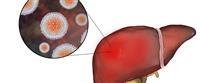
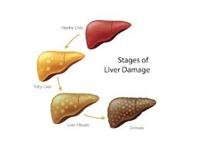
The truth must be pointed out first that diseases related to the liver represent a huge health burden on health services in the Kingdom, on top of which is the Ministry of Health. It provides high budgets to provide the required care for all liver patients in the Kingdom. Rather, we in the association imagine that the budgets provided by the ministry for liver patients reach high numbers because Having a clear vision of the spread or decline of these diseases or their causes, and there are no early detection programs for them, as well as specific prevention or treatment programs, and this of course will lead to diagnosing liver patients at very late stages and will require huge budgets to provide various types of advanced treatment, while if we had plans And comprehensive national programs to deal with liver patients, so we will be able to protect patients, God willing, from reaching advanced stages of disease, and then we can discover their liver diseases in early stages that increase the chances of treatment.
For example, liver tumors represent the highest prevalence of tumors among men in the Kingdom and unfortunately, these cases are still diagnosed in late stages that prevent possible treatment opportunities for these cases, and we look forward to the association, in cooperation with the Ministry of Health hospitals, to launch an integrated national program for liver patients that includes detection This is followed by a treatment program that provides treatment interventions for these patients in the early stages, as well as a national record for these patients and growing plans to the information of doctors who follow these patients, as well as awareness programs. the public. It is expected that this program, if launched, will provide valuable statistical information related only to patients with liver disease, and it will enable health leaders in the ministry to develop more accurate plans to control these diseases.
Communicate with the ministry
Have you suggested that to the Ministry of Health?
Yes, this is what we presented to the Ministry of Health as outlines for a comprehensive national program for liver disease that is based primarily on building a network of interested and collaborating doctors with the program who are members of the association at the same time or even outside the association of practitioners, and through them and after holding many seminars Detailed workshops will be carried out in the stages of the program, which begins with building a national record of all recorded cases through various survey and early detection programs, up to the scientific treatment standards that the association is now working to draw and define, provided that this program is accompanied by a continuous medical education process scheduled in parallel for doctors of all regions and accompanied by With periodic awareness campaigns for citizens in all regions as well. Note that we are looking forward and demand that this program be launched under the umbrella of the Ministry of Health and under the full management of the Ministry, and the association’s role remains limited to a specialized scientific advisory role, no less or more, and it may be appropriate for the Ministry to launch a national liver center in one of its large hospitals that embraces this program and coordinates with the association In its implementation, crystallization and development after being evaluated and studied by the ministry leaders.
Based on the practical implementation plans set out in the program, we hope that it will start through the Ministry of Health, and there is no objection to its beginning in one of the regions only, then it will be generalized if it is proven successful in other health affairs in other regions of the Kingdom, and then it may expand to include the rest of the other health sectors. This program was presented to the Ministry three years ago and until now we have not seen any practical steps regarding its adoption, modification and development. Although we are aware of the huge tasks facing the Ministry of Health and the huge health burdens that it faces in all specialties, not just liver patients, but we in the Saudi Society for Liver Diseases and Transplantation are still looking forward to starting the real practical steps to activate the role of health scientific societies so that we can contribute with the Ministry in facing these The burdens, and this i