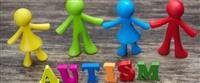

Sheikh Muhammad Hussein Al-Amoudi for Autism Research: Autism is not a mental retardation, but an autistic child may suffer from mental retardation, and the integration of an autistic patient with normal children improves his ability
Societies make remarkable efforts in attempts to reduce the emergence of mental and physical disabilities among their members, because such disabilities have an impact on the lives of the handicapped individuals themselves, or on their families and societies, and autism is one of those cases that were prompted by the attention in society and Dr. Leila Bint Youssef Al-Ayadi Consultant Diagnostic Neurophysiology - Director of the University Center for Autism Research and Treatment, and the supervisor of the Sheikh Muhammad Hussein Al-Amoudi Chair for Autism Research, one of those who cared about this matter and specialized in treating and trying to solve issues, and in this context came the establishment of a chair at King Saud University concerned with community service in reducing Autism, and the deepening of scientific research in its treatment, and this dialogue was in which Dr. Laila answered the community’s questions about autism and what the Sheikh Muhammad Hussein Al-Amoudi Chair offers for autism research and for people with autism.
1- What is the definition of autism?
Autism is a neurological disorder that affects brain functions, causing a hindrance in the brain''s assimilation of information, and how to process it, which leads to problems in the child in the field of social life, and how to communicate with those around him, as well as disorders in the acquisition of behavioral and social education skills, and difficulties in verbal and non-verbal communication, Difficulties in recreational activities, usually appearing during the first three years, and it affects males more than females in a 4: 1 ratio and continues for life, although some have the ability to learn to adjust and modify their behavior.
2- How do parents distinguish that one of their children has autism?
There are common behavioral aspects that characterize people with autism, and on the other hand, it is not possible for us from a practical point of view to find the same behavioral manifestations in all of these children, and even if they exist, they often differ in the way they appear, the degree or the level, and in terms of shape or general appearance They are normal, but they may exhibit some of these symptoms:
Communication
Language development is slow, and it may not develop at all, and words are used differently from other children, where words are associated with unusual meanings for these words, communication is through signs instead of words, such as referring to water instead of asking to drink water, and attention is Focus for a short time, or he may repeat what you say without understanding the meaning.
Social interaction
He spends less time with others, shows less interest in making friends with others, and responds less to social cues such as smiling or looking into the eyes. He also has problems with social interaction, which appear in the inability to understand, comprehend, or awareness of what is going on around him, communication and play, And he has unusual responses when dealing with people, and unnatural arousal.
Unusual sensory problems
Either with increased sensitivity, or decreased sensitivity, such as: sensitivity to bright lights, or certain sounds, or some smells.
Play
There is a lack of automatic or innovative play, and it does not imitate the movements of others, nor does it try to start making imaginary or innovative games.
the behavior
He may be more active or moving than usual, or his movement is less than usual, with episodes of abnormal behavior, such as showing violent or aggressive behavior that harms himself or others for no apparent reason (such as hitting his head against a wall, or biting his hand). He may insist on preserving something, thinking about a specific idea, attaching to one specific person or attaching to a specific game without wanting to change it with another game. There is a clear lack of appreciation of the usual things, stereotypical and repetitive behaviors without getting bored, such as opening and closing the door, and resistance to changing a certain system, such as: changing the place or changing a piece of home furniture from one place to another.
Learning
He may suffer from language delay, or impaired cognitive development, such as: difficulty learning to wash hands before and after eating, inability to rely on oneself in self-care, and difficulty in school education, and these symptoms may differ from person to person, and to varying degrees.
3- Dr. Layla, is autism a genetic disease? Or a gene defect?
In terms of the genetic factor, it did not appear to scientists one specific genetic factor which is the main cause of autism, but there are several different genetic factors when combined together, they increase the risk of autism, and in families where one child has autism the probability of another child being affected is 3 to 8 percent, and in twins who They grow from one egg, monozygotic twins, and the rate of infection in one of them if the other is infected reaches 30 percent, and several studies indicate that the rate of infection in children of first-degree relatives to affected children is greater than in relatives of normal children.
4- Doctor, can autism harm himself or others?
A person with autism may exhibit aggressive behavior towards himself, such as biting his hand, and he may harm others for no reason.
5- What are the causes of autism?
Most cases are not known to cause, however, possible causes indicate factors including
Component genetic
Environmental factors
immunologic immunohistochemistry
Metabolic transformation or metabolic dyspepsia
Increased growth of Candida fungi.
Increased elevation of some minerals affects the progression of the disease
Researchers and scientists have devised theories to explain the cause of autism, but these theories have not been proven, including the child''s exposure to mercury found in some vaccines as a preservative.
Another cause is infection with viruses at birth, such as rubella or cytomegalovirus.
6- Dr. Leila, is it possible to know if the child has autism during pregnancy? Do the medicines used by the pregnant mother have a role for this disease?
It is not possible to know that the fetus has autism during pregnancy, it is possible that taking harmful drugs during pregnancy is one of the causes of autism.
7- Is the nature of food related to autism and its persistence?
Most autistic children suffer from allergies to certain foods due to poor digestion of proteins such as casein and gelatin in an active manner, which results in substances that have a similar effect to the narcotic morphine that affects the natural morphine receptors in the brain, as well as eating foods containing preservatives, colors, hormones or sugars. Negative effect on disease progression and persistence.
8- What is the scale of autism levels in children, Dr. Leila?
There are several measures of autism, and the most common ones are
Childhood autism rating scale (CARS) and Autism Diagnostic Observation Schedule (ADOS)
And it differs due to the different number of symptoms, their severity, and the strength of the effect on the affected child. This measure depends on the child''s observation and evaluation through his interaction with people, his verbal communication, his listening response, physical expression and adaptation to change.
10-A person with autism and a lover of isolation, should we prevent him from being isolated or leave him like this? How can we integrate them into society?
We have to be patient and make an effort to get the autistic child out of his isolation, because isolation is one of the most important reasons for the worsening of the situation, as integrating the autistic person is one of the important things to improve the condition, gain experiences and engage in normal life.
The presence of an autistic child, especially of the simple type, in the case of its combination with ordinary children, improves his ability to communicate in social and address and care for those around him, as introversion is one of the most difficult features of autism, which leads to the rigidity of emotions and the treatment of people around him as inanimate things.
Integration begins with conscious planning to an opportunity for him to mix with his peers so that the problem of aversion to people does not multiply and take into account the strengths and weaknesses of the injured person, and this is done by integrating the injured child with ordinary children in various systematic and unsystematic social activities in school, play, fun, leisure time, sports and excursions. Technical and vocational education classes, computer skills, and other effective activities.
11- Is it possible for the autistic person to practice his normal life, such as study and marriage, for example? How can we help him with that?
People with autism spectrum disorder, and those with near-normal mental abilities can succeed academically. If a person with autism is able to understand himself, understand others, interact with them, express his needs, be able to dialogue and communicate, and be able to work, he will be able to study and be independent.
As for the spouse, if the patient with Asperger''s disorder, he may be associated with a Basperger sufferer and life will be comfortable for both parties in terms of their understanding of the other party.
As for the other types of autism, it is difficult for them to enter into marriage because of the social, emotional, and psychological obligations that such relationships require.
12- Are there specific ways to address the autistic person, or is it the same as the normal person?
Addressing an autistic person is not the same as talking to a normal person, so it needs certain ways to be aware of what is being said and that requires you to allocate time, and there are several methods, most of which depend on two basic approaches. With his behavior and share this moment then add to his experience and share.
In order to achieve the desired benefit, I advise the following
Be face to face with your baby.
Share with your child the things he sees or focuses on.
Wait for your child and give him time to express himself in his own way without interrupting him.
Try to imitate and interpret your child''s actions and sounds rather than trying to push him to speak.
Trying to keep up with the emotional state and the level of effort exerted.
The happiness that he will feel will be the motivation for his attempt and desire to communicate.
13- How can we deal with the language deficit of an autistic child?
Language deficit is considered one of the basic problems for an autistic child, as he loses the acquired language skills, whether as vocabulary or their concept, uses, and his ability to learn other skills, greatly affecting social and behavioral communication.
To get the best results when dealing with language deficits it is essential to
Early intervention and devising a plan to solve or improve the problem of disability through a specialist.
The integration of autistic children with others in the school classroom, taking into account their health conditions by the educational staff.
The participation of the parents of an autistic child in the treatment program is very important for the success of the treatment and this is done through play and various activities. - The use of visual and audio aids such as computers and video devices, according to the preferences of the autistic child.
The use of signs written in the form of vocabulary and sentences on boards and symbolizing the things that he uses and related to his daily li