
limbs
The Directorate of Health Affairs in Al-Ahsa, in the presence of its director, Dr. Abdul-Mohsen bin Nasser Al-Melhem, and Director of King Fahd Hospital, Dr. Muhammad bin Khalid Al-Abd Al-Aali, held a media conference yesterday evening, Monday, on the successes of amputated limb reattachment operations. Many distinguished medical achievements, and he recorded great development and remarkable improvement in relation to complex operations that require highly qualified medical and technical staff and the latest medical equipment at the global level.
And because of the geographical location of Al-Ahsa Governorate and being the main entrance that connects the Kingdom with some of the sisterly Arab Gulf states, and the presence of many oil companies and other companies that use heavy equipment in transportation, maintenance and manufacturing operations, industries, and potential work injuries in agricultural, industrial and other environments Therefore, the chances were greater for severe occupational injuries and serious traffic accidents.
King Fahd Hospital in Al-Hofuf played an effective role in rescuing and rescuing many cases due to its geographical location close to these aforementioned sites and the excellence of the medical staff treating and advanced medical devices.
It is worth noting in this regard, that King Fahd Hospital in Al-Hofuf has become a well-known center for performing this type of complex operations, as a number of these cases are now transferred to the hospital from all over the Eastern Province.
The hospital’s medical teams have succeeded in performing five (5) operations to reconnect amputated limbs from 2005 AD to this year 2013 AD, in addition to a group of distinct and complex surgeries.
In this report, we review the five cases with highlighting the last case, followed by a brief presentation of two successful clients in the field of microscopic vascular surgery.
Cases of reconnecting amputated limbs The first case was in 2005, when a citizen''s hand was completely amputated from the middle of the forearm after being exposed to a traffic coup accident, and the duration of the operation exceeded more than 8 hours, which was successful, and the entire team of anesthesia, nurses, and technicians was involved, each according to his specialty.
The operation was carried out by a working team that included Dr. Muhammad Al-Mumten, a consultant cardiovascular surgery, Dr. Ali Al-Salman, a consultant vascular surgery, Dr. Mustafa Abu Zaid, a plastic surgery consultant, as well as Dr. Muhammad bin Ibrahim Al-Mumten, a consultant vascular and thoracic surgery, Dr. Yassin Al-Rasasi and a consultant orthopedic surgery.
The patient was subjected to a one-year medical rehabilitation and treatment program, after which he was able to restore and move the job.
As for the second case, it was in the year 1428 AH, in which an amputated hand was returned to a Pakistani patient who had an occupational accident, and the operation took about 9 hours, and this hand was returned to its place and the patient then underwent rehabilitative treatment to restore the movement and function of the amputated hand, and the work team included Dr. Mustafa Bouzid, a consultant Plastic surgery, Dr. Abdullah Al-Salman is a consultant plastic surgeon.
As for the third case, it was in 2012 AD, and the hand of a baby whose hand had been amputated in a traffic accident was reinstated by a team that included cardiovascular surgery consultant Dr. Muhammad Al-Mumten, and orthopedic consultant Khaled Al-Mumten, consultant plastic surgery Dr. Mahmoud Amin, and consultant neurosurgery Dr. Essam Abdel Moneim, vascular specialist Dr. Alaa Mohamedi, orthopedic specialist Dr. George, plastic surgeon specialist Dr. Tariq Salah, and neurosurgery specialist Dr. Mohamed Abdel Fattah.
The duration of the operation took 9 hours, during which the amputated organ was returned, the veins, arteries, tendons, and nerves were connected, and the bones were fixed. It was a success, and the patient was able to move his fingers and underwent an intensive rehabilitation treatment period of 18 months.
In the fourth case, a completely amputated hand of a citizen was returned in the middle of the forearm in 11/19/1432 AH, after he had been in a traffic accident.
The team consisted of Dr. Muhammad Al-Mumten, Vascular Consultant, Dr. Essam, Consultant Neurosurgeon, Dr. Kumar, Consultant Orthopedic Surgeon, Dr. Muhammad Yusuf, Intensive Care Consultant, Dr. Alaa Mohammadi, Dr. Hani Al-Hassan, Dr. Hamdi Hashish, Dr. Mahmoud Amin, and Dr. Abdul Rahim.
The duration of the operation exceeded more than 6 hours, during which the amputated hand was restored, the veins, arteries, nerves, and tendons connected and the bones fixed, and the operation was successful, and the patient underwent rehabilitative treatment to restore the movement and function of the amputated hand.
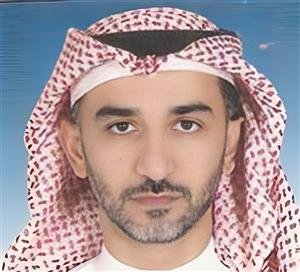
In the fifth case, the duration of the operation reached 14 hours of continuous work under a surgical microscope to restore an amputated hand to a patient, as an electric saw used by a technical worker accidentally resulted in amputation of the middle hand, losing all the fingers and thumb of his right hand, and the patient was treated and then transferred to King Fahd Hospital In Hofuf, the rapid arrangement for admitting the patient to the operating room and equipping an integrated medical team of doctors, assistants, anesthetists, technicians and nursing, led by consultant plastic surgery and delicate plastic surgery, Dr. Mustafa Al-Bouzid.
After the patient was admitted to the operating room, Dr. Mustafa prepared the amputated organ, where he separated and defined all the amputated parts, from constricting tendons and elongated tendons, minute arteries, numerous veins, nerves that transmit sensation, as well as bones. The operation took 14 hours of continuous work under a surgical microscope, which, thank God, has provided the hospital recently, as it is considered the most recent type, and also used the automatic microvascular delivery device that finally reached the hospital, and it is the only device of its kind in the eastern region, and this technology allows the surgeon Delivery of blood vessels 1 millimeter smaller.
After fixing the bones, and connecting all the tendons, all the arteries and veins were connected, and then the severed nerves, using very fine sutures that are not visible to the naked eye.
The thumb was given a top priority in re-implantation, which forced the doctor to use an arterial graft taken from the arm to lengthen his blood vessels and connect them to the main artery of the hand.
During the hours of the operation, the team was in a race against time In order for them to finish at a time when the amputated hand was preserving its vitality before it came to life with the arrival of blood inside it, it forced them to never stop to take any rest, not even to provide for any meal.
And after the end of the operation, it was ensured that the blood passed to all parts of the hand naturally, and out of it through the connecting veins.
This type of operation is considered one of the most complex microscopic and delicate operations, and King Fahd Hospital is a main reference for the Eastern Region for this type of case, as these cases are transferred from all over the region, and many similar operations have been performed in the past to replant amputated fingers for citizens and residents. By God, many of them have been successful, which were reviewed earlier in this report.
The head of anesthesia, Dr. Sami Al-Bayar, played an important role in speeding up the patient’s reception to the operating room, and maintaining a safe level of anesthesia during the fourteen hours of the operation.
Dr. Maysa Al-Alwan, Dr. Imran Al-Qadim, Dr. Tariq Al-Yahya, and a group of health practitioners from the operations team, anesthesia, nursing and auxiliary medical services participated in the surgical team.