Knee arthroscopy aims to treat many problems, such as: wear of the joint cartilage caused by chronic arthritis, joint dislocations, ligament tears, and fluid drainage. There are other natives to knee arthroscopy, such as joint replacement and osteotomy. The choice of the type of operation depends on the patient''s age and the severity of the condition.
Risks of performing the operation
Arthroscopic surgery is associated with many risks, such as the following
Surgical incision infection.
bleeding.
Scars at the surgical site.
in blood pressure
Damage to the surrounding nerves.
Damage to ligaments or muscles.
Fat embolism.
prior to the operation
Blood tests must be done for the patient depending on the patient’s age and the diseases he suffers from. Some general blood tests can be performed, such as: comprehensive blood count, blood chemistry, and coagulation tests.
In addition, an X-ray image of the joint area, computed tomography, or magnetic resonance imaging is done.
The doctor must be informed of all medications, nutritional supplements, and herbs that the patient is taking, and he must fast for 8 hours before the operation.
during the procedure
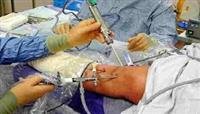
After completing the anesthesia, the surgical area is cleansed, then small incisions are made in the frontal area of the knee to the arthroscope through one of the incisions, through which he can see the knee cavity on the TV screen.
Some surgical tools are ed through the other incisions to complete the required surgical procedure, depending on the case, such as cutting out the excess cartilage and bone tissue in cases of degenerative cartilage inflammation, then the small incisions are sutured, and an elastic bandage is placed on the joint.
Post-operation
The patient can leave the hospital or stay to ensure that his condition is stable, and this varies according to the type of injury and the severity of the pain he suffers from, and the stitches are usually removed after about a week.
In some cases, the patient is given some painkillers and antibiotics intravenously to prevent infection.
The patient should go directly to the doctor if some symptoms appear, such as: severe pain, loss of sensation in the area, feeling weak, high temperature, shortness of breath, secretions from the surgical incision, and bleeding.
Most patients feel an improvement in performance after knee arthroscopy, and it is advisable to move around early after the operation, as it improves the outcome of the operation, with the need to avoid making sharp movements, such as bending and rotating the joint.