
The pain of the birth experience differs from one pregnant woman to the next. Depending on the psychological state before birth and its ability to endure The pain is continuous in the abdomen and lower back, accompanied by cramps that resemble menstrual cramps, with vaginal discharge that is brown or mixed with blood.
You feel heaviness, cramping and pain spreading in the lower abdomen, due to the laxity of the pelvic joints, which are slightly apart To make way for the child''s passage.
The feeling of heaviness comes as a result of the increased weight of the child, who is moving down the pelvis hours before the start of contractions.
The occurrence of painful and regular contractions, a sign of progress and approaching the date of labor, which will strengthen and prolong with time.
There are cases in which the water sac - the mucous membrane plug - bursts so you are about to give birth if it is accompanied by contractions that lead to the expansion of the cervix.
In the moments before birth, the fetus’s head takes its position in the pelvis, so you will be able to breathe more deeply and eat larger quantities, with frequent visits to the bathroom.
It is necessary to follow the growth of the fetus normally, and this is done by estimating the size of the uterus, and measuring the mother''s pelvis by conducting a radiograph. To find out about the baby coming with the head, otherwise we have to expect some difficulties.
It is preferable for the father to be present during childbirth to support the mother, and to provide her with an atmosphere of love and security in moments of weakness and fatigue.
Your feeling of fatigue and nausea after things were going well due to the hormonal change, which occurs in late pregnancy to begin the birth process.
Sometimes there is a loss of the mucous plug - getting rid of the sputum that has blocked the cervix during the whole pregnancy - at the start of contractions, or three days before birth.
You have an urgent desire to arrange the nest and conduct a thorough cleaning, and for everything to be clean and tidy, which announces the imminent arrival of the child.
If you are a leg, you have time to get to the hospital even though contractions are regular As several hours separate between it and the full opening of the neck.
When you feel pain, put your hand on your stomach, and you find it stiff, and if you cannot bear it, take some painkillers to remove it, and this means that it is real, and it announces the start of labor.
The pain may reach its climax, then subside, so you do not feel any pain. Until the second contraction begins, and when the interval between them becomes 10 minutes, you can go to the hospital.
The cervix gradually opens under the influence of these contractions, and the complete extension of the neck is equivalent to an opening with a diameter of 10 cm. This helps to push the child gradually forward, and rotate slightly to turn towards the better axis. To pass through the basin.
The fetus cannot come out unless the uterus is completely stretched, and the mother feels her baby’s head leaning against the bottom of the uterus, and she tends to push it, but she must wait until the doctor asks her to do so.
6 Important information for you
1- 25% of pregnant women consider pain intolerable. According to their mental and health condition at birth.
2- The brain, under the influence of pain, produces substances similar to morphine. To relieve it called Andrew Finn, and under the influence of stress and excessive fear, the adrenal gland produces adrenaline that impedes the production of endorphins, so the woman feels more pain, with an acceleration in the heartbeat and the pace of breathing, and a rise in blood pressure, and this results in an imbalance in the work of the uterine muscle between activity and disability .
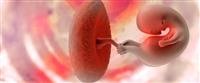
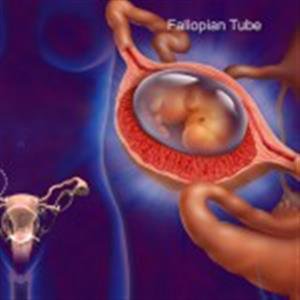
3- The baby''s head in the state of birth is downward, his arms are crossed against his chest, and his legs are raised and folded To occupy the least possible space.
4- The fetus’s brain in the last stages of development secretes 25 to 30 mm of urine per hour - two tablespoons - and this urine is poured into the amniotic fluid in which it swims.
5- When the membranes rupture during childbirth, we find this fluid flowing through the cervix and vagina, forming a fatty substance that facilitates the exit of the fetus.
6- The least developed organ at birth is the brain, and it will slowly continue its journey towards biological maturity Until he is eighteen or twenty.