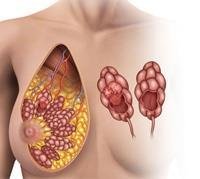
tumors?
Spotting a breast lump can be alarming, but most breast lumps are not cancerous. Often times, these lumps may turn out to be nothing more than fluid-filled sacs. There are some characteristics that can help women distinguish between a cyst and a tumor. However, it is important to consult your doctor about breast lumps so that you can get the correct diagnosis.
Below are some of the key differences between cysts and breast lumps, and how ultrasound can help identify each one.
What is a breast cyst?
Breast cysts form when fluid builds up. This may be due to a hormonal imbalance, but the exact cause is not clear. These round or oval cysts filled with fluid are fairly common, especially in women who have reached the age of 40. Cysts may be so small (microcysts) that you cannot feel or see them without a mammogram, and sometimes they can grow very large (large cysts).
Symptoms may vary in severity during the menstrual cycle and may include
Bloating
Tenderness
the pain
Cysts can be simple, complex, or dangerous
Simple cysts: have smooth borders, thin walls, and are fluid-filled, but are always benign. The cysts that form due to fibrous changes are simple.
Compound cysts: Unlike simple cysts, complex cysts have irregular borders and thick walls and the fluid contains some solids, but most of them are benign.
Complex cysts: usually between the simple and the compound. They do not have thick walls, but the liquid inside them may contain some solids, most of which are benign.
What are breast lumps?
A breast lump is a solid lump that can be cancerous or benign.
Benign breast tumors
Benign breast tumors consist of abnormal but benign cells, which means that although they can grow, they cannot spread to other parts of the body.
The most common types of benign breast lumps include
Fibroadenomas: These benign tumors consist of connective tissue and the gland. It is most common in women between the ages of 20 and 30 years, and can range from one to five centimeters in size. It can be soft or chewy, with clearly defined edges, and it''s easy to move it with your fingers.
Ductal papillomas: These tumors develop in the breast canal, usually near the nipple, and may cause pain.
Fibroid epithelial neoplasia: These tumors grow in the connective tissues and the gland. The tumor may be round and flat, causing pain sometimes, and it tends to grow rapidly. However, a minority of epithelial fibroids are precancerous.
Cancerous breast tumors
Cancer cells contain damaged DNA. Instead of decay, they produce more abnormal cells, forming tumors that can spread to healthy tissues.
Cancer cells can also separate to form new tumors, or enter the bloodstream and lymphatic system. Once this happens, cancer cells can spread to other organs of the body.
Most breast cancers are adenocarcinomas - a type of tumor that develops in the glandular cells that produce mucus. Ductal carcinoma in situ begins in the milk ducts, and lobular carcinoma in situ begins in the milk-producing lobules. Rare types of cancerous breast lumps include:
Soft tissue sarcoma
Liability tumors
Phyllodes tumor
Breast cancer in the early stages does not always cause symptoms, but symptoms may include
A hard lump that you cannot move easily with your fingers
The mass does not change with your period
Changes in the size and shape of the breast or nipple
The differences between a breast cyst and a tumor
If you feel a lump in the breast, it is important for a doctor to make a diagnosis as soon as possible. Although there are some clear differences between a cyst and a tumor, these differences are slight. Additionally, there are always exceptions to these criteria.
Possible characteristics of a breast cyst: pain, supple and smooth texture, easily transmissible within breast tissue, changes with your period.
Possible characteristics of a breast lump: absence of pain, a firm and durable feel, cannot be moved easily within breast tissue, does not change with your period.
How are breast cysts diagnosed and treated?
The physical exam can give your doctor a general idea of whether you are dealing with a cyst or tumor. Usually the next step is to undergo an ultrasound test. If the sound waves are passing through the mass, this means that it is filled with fluid and it is a simple cyst. If the sound waves echo, this means that there is at least some solid material and more tests will be needed to make the correct diagnosis.
If the ultrasound shows a compound cyst, it may include the following steps
Mammogram or MRI to get a better view of the entire breast.
Suction or emptying the cyst with a fine needle to see if the fluid contains any blood or unusual cells.
Biopsy to determine whether solid areas are cancerous or benign.
Of the total about 1.6 million breast biopsies annually in the United States, 75 percent are benign.
A simple cyst is not a concern and does not necessarily require treatment. Your doctor may suggest a "wait-and-see" approach because cysts can sometimes go away on their own. For cysts that continue to cause discomfort, your doctor can empty the cyst or surgically remove it.
Is there a relationship between breast cysts and cancer?
According to the American Cancer Society, simple cysts do not increase the risk of breast cancer, although there is a small chance the possibility of complex cysts developing. A study published in 2019 found that 30 percent of breast cancer cases were in women with a history of benign breast disease.
If you are concerned about breast cancer risk or have a family history of breast disease, talk to your doctor about how and when to get tested, and if there are any other precautions you need to take.
What changes should I pay attention to?
Breast cancer is unusual for symptoms in its early stages, but here are some warning signs
A lump in the breast
Swelling, redness, or tenderness in the breast
The appearance of boils on the skin of the breast, its peeling, or its change in thickness
Inverted nipple or nipple discharge
Swollen lymph nodes under the arms or around the collarbone
Finding some of these symptoms does not mean that you have breast cancer, but you should consult your doctor if you notice one of them. This makes it easier to treat breast cancer in the early stages before it spreads to other parts of the body.
How is a breast self-exam done?
Performing a breast self-exam will help you get to know the normal condition of your breasts, making it easy to notice any changes that may occur later. And if you''re still menstruating, the best time to self-test is a few days after your period ends.
Follow these steps when performing a self-exam
Stand without clothes in front of a mirror. Keep your shoulders straight and your arms at your sides. Make sure that there are no changes in the size, shape, or color of your breasts, and look for any swelling or changes in the nipple, including secretions.
Reconsider the above, but with your arms raised.
Next, lie down and raise your right arm over your head.
Examine the right breast using the pads of the fingers of your left hand, keeping the fingers flat and close together. Then start feeling in small, circular motions, looking for any unusual marks in your breast, starting at the nipple, and continuing away from it.
Continue to examine your entire breast, from the collar bone to the upper part of the abdomen, and from the middle of your chest to the armpits. Try to follow a certain pattern so that you can reach all of your breasts. Before you finish, squeeze the nipple gently to check for any secretions.
Finally, after standing or sitting, raise your right arm above your head and massage your breast in a similar way to the steps above. It should be noted that doing the test while showering when your skin is wet may facilitate the scanning process properly.
Once you are done with the first breast, reverse the arms and repeat the same steps.
Try to do a self-test once around the same time every month.
When should you consult a doctor?
Make sure to see your doctor if you feel a strange lump in your breast, or notice other changes, such as: changes in the skin of your breast, swelling, secretions, and inverted nipples. During your visit to the doctor, ask about risk factors and the recommended schedule of medical exams.
Conclusion
A lump in your breast may be a cyst or tumor. There are some characteristics to look for, including symptoms that change during your period, which may indicate one of them.
Breast cysts are fluid-filled cysts and are very common, especially in females in their 40s. Most of the time, breast cysts are benign and do not need treatment. In contrast, a lump can be precancerous or non-cancerous, and it usually requires treatment.
It can be difficult to distinguish a cyst from a tumor by only sensitizing it or taking other factors into account. Therefore, if you feel a lump of some kind in your breast, it is important to see your doctor to get a proper diagnosis as soon as possible.