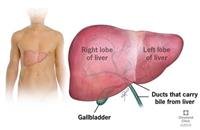
A liver transplant is a surgical procedure that removes a liver that no longer functions properly (liver failure) and replaces it with a healthy liver from a deceased donor or a portion of a healthy liver from a living donor.
Your liver is your largest internal organ and performs several critical functions, including:
Processing nutrients, medications and hormones
Producing bile, which helps the body absorb fats, cholesterol and fat-soluble vitamins
Making proteins that help the blood clot
Removing bacteria and toxins from the blood
Preventing infection and regulating immune responses
Liver transplant is usually reserved as a treatment option for people who have significant complications due to end-stage chronic liver disease. Liver transplant may also be a treatment option in rare cases of sudden failure of a previously healthy liver.
The number of people waiting for a liver transplant greatly exceeds the number of available deceased-donor livers.
Living-donor liver transplant is an native to waiting for a deceased-donor liver to become available. Living-donor liver transplant is possible because the human liver regenerates and returns to its normal size shortly after surgical removal of part of the organ.
In 2017, about 8,000 liver transplants were performed in the U.S. among both adults and children. Of those, about 360 involved livers from living donors. At the same time, approximately 11,500 people were registered on the waiting list for a liver transplant.
Why it''s done
Liver transplant is a treatment option for people with liver failure whose condition can''t be controlled with other treatments and for some people with liver cancer.
Liver failure may happen quickly or over a long period of time. Liver failure that occurs quickly, in a matter of weeks, is called acute liver failure. Acute liver failure is an uncommon condition that is usually the result of complications from certain medications.
Although a liver transplant may treat acute liver failure, it is more often used to treat chronic liver failure. Chronic liver failure occurs slowly over months and years.
Chronic liver failure may be caused by a variety of conditions. The most common cause of chronic liver failure is scarring of the liver (cirrhosis). When cirrhosis occurs, scar tissue replaces normal liver tissue and causes the liver to not function properly. Cirrhosis is the most frequently reason for a liver transplant.
Major causes of cirrhosis leading to liver failure and liver transplant include
Hepatitis B and C.
Alcoholic liver disease, which causes damage to the liver due to excessive alcohol consumption.
Nonalcoholic fatty liver disease, a condition in which fat builds up in the liver, causing inflammation or liver cell damage.
Genetic diseases affecting the liver, including hemochromatosis, which causes excessive iron buildup in the liver, and Wilson''s disease, which causes excessive copper buildup in the liver.
Diseases that affect the bile ducts (the tubes that carry bile away from the liver), such as primary biliary cirrhosis, primary sclerosing cholangitis and biliary atresia. Biliary atresia is the most common reason for liver transplant among children.
Risks
Complications of the procedure
Liver transplant surgery carries a risk of significant complications. There are risks associated with the procedure itself as well as with the drugs necessary to prevent rejection of the donor liver after the transplant.
Risks associated with the procedure include
Bile duct complications, including bile duct leaks or shrinking of the bile ducts
Bleeding
Blood clots
Failure of donated liver
Infection
Rejection of donated liver
Mental confusion or seizures
Long-term complications may also include recurrence of liver disease in the transplanted liver.
Anti-rejection medication side effects
After a liver transplant, you''ll take medications for the rest of your life to help prevent your body from rejecting the donated liver. These anti-rejection medications can cause a variety of side effects, including:
Bone thinning
Diabetes
Diarrhea
Headaches
High blood pressure
High cholesterol
Because anti-rejection drugs work by suppressing the immune system, they also increase your risk of infection. Your doctor may give you medications to help you fight infections.
How you prepare
Choosing a transplant center
If your doctor recommends a liver transplant, you may be referred to a transplant center. You''re also free to a transplant center on your own or choose a center from your insurance company''s list of preferred providers.
When you''re considering transplant centers, you may want to
Learn about the number and type of transplants the center performs each year.
Ask about the transplant center''s liver transplant survival rates.
Compare transplant center statistics through the database maintained by the Scientific Registry of Transplant Recipients.
Understand the costs that will be incurred before, during and after your transplant. Costs will include tests, organ procurement, surgery, hospital stays, and transportation to and from the center for the procedure and follow-up appointments.
Consider additional services provided by the transplant center, such as coordinating support groups, assisting with travel arrangements, helping with local housing for your recovery period and offering referrals to other resources.
Assess the center''s commitment to keeping up with the latest transplant technology and techniques, which indicates that the program is growing.
After you''ve ed a transplant center, you''ll need an evaluation to determine whether you meet the center''s eligibility requirements. Each transplant center has its own eligibility criteria. If you aren''t accepted at one transplant center, you may undergo evaluation at another center.
The goals of the evaluation process are to determine whether you
Are healthy enough to have surgery and tolerate lifelong post-transplant medications
Have any medical conditions that would interfere with transplant success
Are willing and able to take medications as directed and follow the suggestions of the transplant team
Specific tests, procedures and consultations you may undergo include
Laboratory tests, such as blood and urine tests to assess the health of your organs, including your liver
Imaging tests, such as an ultrasound of your liver
Heart tests to determine the health of your cardiovascular system
A general health exam, including routine cancer screening tests, to evaluate your overall health and to check for any other illnesses that may impact the success of your transplant
Your evaluation may also include
Nutrition counseling with dietitians who assess your diet and make recommendations on how to plan healthy meals before and after your transplant
Psychological evaluation to assess and treat any underlying issues, such as depression or anxiety, and determine whether you fully understand the risks of a liver transplant
Meetings with social workers who assess your support network to determine whether you have friends or family to help care for you after transplant
Addiction counseling to help people who are struggling with how to quit alcohol, drug or tobacco
Financial counseling to help you understand the cost of a transplant and post-transplant care and to determine what costs are covered by your insurance
Once these tests and consultations are completed, the transplant center''s ion committee meets to discuss your situation. The committee determines whether a liver transplant is the best treatment for you and whether you''re healthy enough to undergo a transplant.
If the answer to both questions is yes, then you''re placed on the liver transplant waiting list.
What you can expect
Before the procedure
Being placed on the waiting list
Doctors will use the results of your liver function tests and other factors to assess the severity of your illness, how urgently you need a transplant and your place on the liver transplant waiting list.
Your transplant waiting list priority is determined by two scoring systems called Model for End-Stage Liver Disease (MELD) for adults and Pediatric End-Stage Liver Disease (PELD) for children younger than age 12.
Your doctor will use a specific formula to determine your MELD scores, which can range from 6 to 40. The scores estimate the risk of death within 90 days without a transplant. A high MELD score indicates the urgent need of a transplant.
As deceased-donor organs become available, they are allocated according to MELD scores and classified by blood type. People with higher MELD scores are generally offered donated livers first. Time spent on the liver transplant waiting list is used to break ties among people with the same MELD scores and blood type.
Some liver conditions, such as liver cancer, may not result in a person getting a high MELD score. The transplant center can request additional MELD points for people with specific diseases if they meet defined exception criteria.
In addition, adults with acute liver failure are exempted from the MELD-based donor organ prioritization system and may be placed higher on the transplant waiting list according to the severity of their disease.
Waiting for a new liver
The wait for a donor liver can vary greatly. Some people wait days, while others wait months or may never receive a deceased-donor liver.
As you wait for a new liver, your doctor will treat the complications of your liver failure to make you as comfortable as possible.
Complications of end-stage liver failure are serious, and you may be frequently hospitalized. If your liver deteriorates, your MELD score is d.
Living liver donors
Living-donor liver transplants using a small portion of a liver from a healthy, living person account for a small percentage of liver transplants each year. Living-donor liver transplants were initially used for children needing a liver transplant because suitable deceased-donor organs are scarce. Now, it is also an option for adults who have end-stage liver disease.
Living-donor liver transplants offer an native to waiting for a deceased-donor liver, and allow the organ recipient to avoid possible health complications of waiting for a transplant. The first step is to identify a living donor who is healthy and able to safely undergo a major surgical procedure. The donor''s age, blood type and organ size also are critical considerations in determining whether you and the donor are a match for living-donor liver transplant.
Most living liver donors are close family members or friends of the liver transplant candidate. If you have a family member or friend who is willing to donate part of his or her liver to you, talk to your transplant team about this option.
Living-donor transplants have good results, just as transplants using livers from deceased donors. But finding a living donor may be difficult. Living liver donors go through extensive evaluation to ensure they are a match with the organ recipient and to assess their physical and mental health. The surgery also carries significant risks for the donor.
Your transplant team can discuss the benefits and risks with you and the potential donor.
Domino liver transplant
Another, less common, type of living-donor liver transplant is called a domino liver transplant. In a domino liver transplant, you receive a liver from a living donor who has a disease called familial amyloidosis. Familial amyloidosis is a very rare disorder in which an abnormal protein accumulates and eventually damages the body''s internal organs.
The donor with familial amyloidosis receives a liver transplant to treat his or