What is gastroscopy?
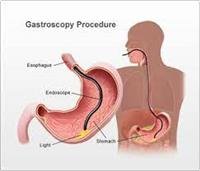
Gastroscopy (or endoscopy) is an examination of the oesophagus (gullet or food pipe), stomach and duodenum (upper part of the small bowel) using a flexible telescope called a gastroscope.
When necessary, during the examination, a number of small procedures can also be carried out. These procedures may include:
taking a small tissue sample (biopsy)
stopping bleeding from an ulcer
removal of polyps.
Terms explained
Gastroscope – a long flexible plastic tube (about the thickness of your little finger) fitted with a tiny camera that allows the doctor to have a clear view of the oesophagus and other internal organs.
Polyp – a growth on the lining of the oesophagus, stomach or small bowel.
Why am I having a gastroscopy?
Patients have gastroscopy for several reasons. For example, there may be symptoms such as indigestion or discomfort suggesting an ulcer. Alternatively, it may be done to treat certain conditions through the gastroscope.
Benefits of a gastroscopy
An native method of examining this part of the body is by X-ray. Gastroscopy has the advantage over X-rays of generally being more accurate for detecting diseases, and also of allowing tissue samples or biopsies to be taken.
Risks of a gastroscopy
Complications of a gastroscopy, such as perforation (puncture) of your stomach or bowel wall or major bleeding (for example, requiring blood transfusion) are extremely uncommon.
When the examination only inspects the bowel or taking a biopsy, these complications occur in less than 1 in 10,000 procedures.
When other procedures or operations are carried out through the gastroscope the risk may be greater and this will depend on the condition being treated and the operation proposed. Ask your doctor, or the doctor performing the gastroscopy, about the risks related to any additional procedures or operations.
Very uncommonly, there may be damage to teeth from the mouthguard used during the gastroscopy. If you have false or loose teeth, please inform the staff before the test.
Gastroscopy can involve sedation. Risks of sedation are uncommon but may include difficulty breathing and abnormal heart rhythms.
Serious sedation reactions may be more common in patients with severe heart or chest disease. These complications are usually avoided by administering oxygen during the procedure and monitoring the oxygen level in the blood.
Some patients wish to have the gastroscopy without sedation, so if this applies to you please discuss this when you attend for the examination.
Preparation
You will usually be asked not to eat or drink for 6 hours before gastroscopy.
Tell your doctor before the procedure if you
are sensitive (allergic) to any drug or substance
are taking blood thinning tablets such as Warfarin
have heart valve disease
have a pacemaker.
On the day of the procedure
Wear something comfortable and loose with short sleeves.
If you are an outpatient, report to the hospital as outlined in your referral letters.
What happens during a gastroscopy?
A spray may be applied to the throat to numb it, and it is important that any dentures or plates are removed.
Some patients wish to have the gastroscopy without sedation, so if this applies to you please discuss this when you attend for the examination. Otherwise, you will be given a sedative injection through a vein in your arm before the procedure.
Doctors will gently the gastroscope through your mouth and into the oesophagus, stomach and duodenum (upper part of the small bowel).
The test usually takes about 5 to 10 minutes. Any discomfort at the back of the throat is minimised by using the throat spray and sedative injection, and is helped by calm deep gentle breathing during the test.
After a gastroscopy
Any sedative you are given before the procedure is very effective in reducing discomfort. However, it may also affect your memory for a few hours afterwards. Even when the sedative appears to have worn off, you may find that you are unable to recall details of your discussion with the doctor and nursing staff. For this reason a relative or friend should come with you if possible.
For your personal safety following the sedated procedure, we strongly encourage a friend or relative to escort you from our day ward and drive you home.
After the sedative you should not
drive a car for 24 hours
operate machinery for 24 hours
sign any legal documents until the next day
undertake any other activities likely to place you at risk.
The vast majority of patients having a gastroscopy with sedation do not return to work on the day of the examination.
Following the procedure you may have a slightly sore throat for up to 24 hours.