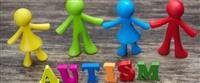
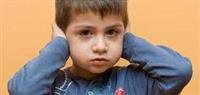
Autism or autism is one of the disorders belonging to a group of developmental disorders called in the medical language Autism Spectrum Disorders - ASD, it appears in infancy, often before the child reaches the age of three years.
Although the severity and symptoms of autism vary from case to case, all autism disorders affect a child''s ability to communicate with those around him and develop mutual relationships with them.
Estimates show that 6 out of every 1,000 children in the United States have autism and the number of diagnosed cases of the disorder is constantly increasing.
It is not yet known if this increase is a result of better effective case detection and reporting, an actual and real increase in the number of people with autism, or the result of these two factors together.
Although there is no cure for autism yet, intensive treatment and early diagnosis can make a significant and significant change in the lives of children with this disorder.
The main difficulties faced by autistic patients
Children with autism also almost certainly have difficulties in three basic developmental areas:
Mutual social relations.
the language.
the behavior.
As children progress towards adulthood, some of them may become more able and willing to mingle and integrate into the surrounding social environment, and they may show fewer behavioral disturbances than those characteristic of autism, and some may even succeed in leading a normal life or lifestyle soon From normal and normal.
On the other hand, others continue to have difficulties in language skills and in social interactions, to the extent that adulthood worsens their behavioral problems.
Some children are slow to learn new information and skills, and others have a normal IQ, or even higher than other normal people. These children learn quickly but have communication problems in applying the things they have learned in their daily lives and in coping with different situations.
A very small proportion of children with autism are self-educated and have unique exceptional skills, especially in a particular field, such as: art, mathematics or music.
Autism symptoms
Because the signs and symptoms of autism vary from patient to patient, two different children with the same medical diagnosis are likely to behave in very different ways and to have entirely different skills.
But severe autism cases are characterized in most cases by the absolute inability to communicate, or to establish reciprocal relationships with other people.
Most children develop symptoms of autism in infancy, while other children may arise and develop completely normally during the first months or years of life but suddenly become withdrawn, hostile, or lose the language skills they have acquired until then.
Although every child has symptoms of autism, and shows its own temperament and patterns, the following symptoms are the most common for this type of disorder:
1. Disorders in social skills
Symptoms appear on the patient as follows
He does not respond to his name being called.
No more direct eye contact.
It seems he can''t hear him.
Refuses to hug or shrinks in on himself.
He does not seem to be aware of the feelings and feelings of others.
He seems to like to play alone, expecting his own person in his world.
2. Problems with language skills
The following are the main symptoms of language skills difficulties
Begins to speak at a later age compared to other children.
He loses the ability to say certain words or sentences he was previously familiar with.
Makes eye contact whenever he wants something.
Speaks in a strange voice or with different tones and rhythms, or speaks using a singing voice, or in a voice similar to that of a robot.
Cannot initiate a conversation or continue an existing conversation.
May repeat words, phrases, or terms but does not know how to use them.
3. Behavioral problems
The following are the main symptoms of behavioral problems in autistic patients
Performs repetitive motions, such as rocking, spinning in circles, or waving hands.
Develops habits and rituals that he repeats all the time.
He loses his calm when there is any change, even the slightest or smallest change, in these customs or rituals.
be constantly moving.
Being stunned and fascinated by certain parts of the objects, such as: a wheel spinning in a toy car.
Being overly sensitive to light, sound, or touch, but unable to feel pain.
Young children have difficulties when asked to share their experiences with others.
Causes and risk factors for autism
There is not one single factor known as a definitive cause of autism.
However, given the complexity of the disease, the extent of autistic disorders, and the fact that two autistic states do not match, that is, between two autistic children, it is likely that there are many factors that cause autism.
Causes of autism
Among the most important causes that may lead to autism
1. Hereditary disorders
Researchers have discovered several genes likely to play a role in causing autism, some of which make a child more susceptible to the disorder, while others affect brain growth and development and the way brain cells communicate with each other.
Any genetic defect by itself and alone may be responsible for a number of cases of autism, but it appears in a holistic view that genes in general have a very central or even decisive influence on autism, and some genetic disorders may be transmitted genetically, while others may appear spontaneously (Spontaneous). ).
2. Environmental factors
A large part of health problems are the result of genetic and environmental factors combined together, and this may be true in the case of autism.
Recently, researchers are examining the possibility that a viral infection or environmental pollution may be a motivating factor for the development of autism.
3. Other factors
There are other factors that are being researched and studied recently, including: problems during childbirth, and the role of the immune system in everything related to autism.
Some researchers believe that damage to the amygdala, a part of the brain that acts as a risk detector, is one factor in triggering the onset of autism.
autism
Autism risk factors
Autism may appear in any child of any origin or nationality, but there are known risk factors that increase the likelihood of developing autism, and these factors include:
1. Baby''s gender
Research has shown that male children are three times more likely to develop autism than female children.
2. Family history
Families that have a child with autism have a higher probability of giving birth to another child with the disease, and it is known and common that parents or relatives who have a child with autism suffer from certain disorders themselves in some developmental skills, or development, or even from autistic behaviors certain.
3. Other disorders
Children with certain medical problems are more likely to develop autism. These medical problems include:
Fragile x syndrome, an inherited syndrome that leads to mental disorders.
Tuberous sclerosis, which leads to the formation and development of tumors in the brain.
A neurological disorder known as Tourette syndrome.
Epilepsy that causes seizures.
4. Parent''s age
Researchers tend to believe that parenting at a later age may increase the likelihood of developing autism.
Very comprehensive research has shown that children born to men over the age of 40 are 6 times more likely to develop autism than children born to fathers under the age of 30, and the research shows that mother''s age has a marginal effect on the likelihood of autism.
Complications of autism
Complications of autism include
Inability to succeed in studies.
Social isolation.
Inability to live independently.
Stress.
Abuse and violent dealing with them.
Autism diagnosis
Autism diagnosis
The treating pediatrician performs regular growth and development checks to detect a developmental delay in the child.
If the child has symptoms of autism, he can go to a doctor who specializes in treating autism, who, in cooperation with a team of other specialists, will conduct an accurate assessment of the disorder.
Because autism ranges from so many degrees of severity and severity of symptoms, diagnosing autism can be a complex and complex task, as there is no specific medical examination to detect an existing autism.
disease diagnosis
The formal assessment of autism includes the following
Consultation of the child''s specialist doctor.
Conversation with parents about the child''s social skills, language abilities, and behavior, and how and to what extent these factors change and develop over time.
Subjecting the child to several examinations and tests to assess his speech and language abilities and to examine some psychological aspects.
Although the initial symptoms of autism appear before the age of 18 months, the final diagnosis is sometimes made only when the child reaches the age of two or three years, when there is a defect in development, a delay in the acquisition of language skills, or a defect in interpersonal social relations.
Early diagnosis is very important, because early intervention, especially before the child reaches the age of three years, is a very important element in achieving the best possibilities and opportunities for improvement in the situation.
Autism treatment
To this day, no single treatment is available for everyone with the same amount, and in fact the range of treatments available for autistic patients that can be adopted at home or at school is surprisingly very diverse.
Autism treatment includes
Behavioral therapy.
Speech language pathology therapies.
Didactic and educational therapy.
drug therapy.
Autism prevention
There is no way to prevent autism, but early diagnosis can improve the behavior of a person with autism.
Alternative therapies
Since autism is a very difficult and intractable condition that does not have a curative treatment, many parents resort to solutions provided by native medicine.
Although some families have reported positive results after treating autism with a special diet and other native therapies, researchers cannot confirm or deny the effectiveness of these various treatments in autistic patients.
Some very popular native treatments include
New creative treatments.
Follow their own diet.