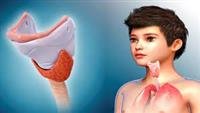
Hypothyroidism is defined as a deficiency in the production of thyroid hormone.
Hypothyroidism in children usually occurs when there is an anatomical problem or inflammation of the thyroid gland.
Symptoms depend on the child''s age, but include delayed growth and development.
Diagnosis is based on newborn screening tests, blood tests, and radiographic tests.
The condition is treated with thyroid hormone replacement medications.
(For adults, see also hypothyroidism.)
The thyroid gland is one of the endocrine glands located in the neck. Endocrine glands release their hormones directly into the bloodstream. Hormones are chemicals that affect the activity of other parts of the body.
The thyroid gland secretes thyroid hormone. Thyroid hormone controls the body''s metabolic rate, including heart rate, and how the body regulates its temperature. If the thyroid gland doesn''t produce enough thyroid hormone, these functions can slow down.
There are two types of hypothyroidism in infants and older children
Congenital hypothyroidism: This condition is present from birth
Acquired hypothyroidism: occurs after birth
congenital hypothyroidism
Congenital hypothyroidism occurs when the thyroid gland does not develop or function properly before birth (see Neonatal Hypothyroidism). This type of hypothyroidism occurs in a rate of 1 case in 2,000 to 4,000 births. Most cases occur spontaneously, but about 10-20% of them are inherited.
Most cases of congenital hypothyroidism (about 85% of them) occur because the thyroid gland is absent, underdeveloped, or misplaced. Less commonly, the thyroid gland may develop normally but not produce thyroid hormone properly.
Congenital hypothyroidism can occur if the mother does not get enough iodine in her food (iodine deficiency). Iodine deficiency is rare in the United States, but may be common in some developing countries. Another rare cause is central hypothyroidism. Central hypothyroidism is caused by structural problems that occur in me during the growth and development of the pituitary gland.
Sometimes medications used to treat thyroid disorders or substances in foods can pass into the fetus through the placenta and cause congenital hypothyroidism temporarily. In rare cases, the pituitary gland can develop abnormally or fail to stimulate the thyroid gland to produce thyroid hormone (see Overview of the Thyroid gland).
Acquired Hypothyroidism
Acquired hypothyroidism occurs after childbirth. It occurs later in childhood and adolescence.
This type of hypothyroidism is usually caused by inflammation of the thyroid gland, according to Hashimoto. In Hashimoto''s thyroiditis, the body''s immune system attacks the cells of the thyroid gland, causing chronic inflammation in the thyroid gland, which leads to decreased thyroid hormone production.
Symptoms
Symptoms of hypothyroidism vary with the age of the child.
Babies and Toddlers
If iodine deficiency occurs very early in pregnancy, infants may have severe failure to thrive, abnormal facial features, intellectual disability and muscle stiffness that becomes difficult to move and control (spasticity).
At first, most infants with hypothyroidism have few or no symptoms because some amounts of thyroid hormone have reached them from the mother through the placenta. Once the mother''s amount of thyroid hormone is depleted, symptoms begin to appear gradually, and the disease becomes detectable when screening tests are performed in the newborn.
If hypothyroidism is not treated, brain development will slow, and the child may suffer from weak muscle tone, hearing loss, enlarged tongue, malnutrition, and hoarse crying. Delayed treatment of severe cases of hypothyroidism can lead to intellectual disability and short stature.
Older children and teens
Some symptoms in older children and teens are similar to those of hypothyroidism in adults (such as weight gain, tiredness, constipation, split ends and dry hair, and dry, cracked, and thickened skin). Symptoms that appear only in children include slowed growth, delayed skeletal development, and delayed puberty.
Diagnosis
Newborn screening test
blood tests
Sometimes radiographic exams
Since infants with congenital hypothyroidism often do not have any abnormalities, doctors perform screening tests on all newborns. If the screening test results are positive, other tests to determine the levels of thyroid hormones in the blood (thyroid function tests) are done to confirm the diagnosis of hypothyroidism. If the diagnosis is confirmed, the newborn should be treated promptly to prevent developmental delay.
Once congenital hypothyroidism is diagnosed, your doctor may perform imaging tests such as radioactive iodine or ultrasonography to determine the size and position of the thyroid gland.
Thyroid tests are also done in older children and teens, who doctors may suspect of having hypothyroidism. Ultrasonography may also be done if the doctor suspects a child has an enlarged thyroid gland (goiter).
The doctor performs an MRI of the brain and pituitary gland in children with hypothyroidism to rule out other possible brain causes.
the money
Most infants who are treated regain normal control of movement and intellectual development.
Healer
Thyroid hormone replacement therapy
Children with congenital hypothyroidism are usually given treatment with the synthetic thyroid hormone levothyroxine. Most children need thyroid hormone replacement therapy for life. Thyroid hormone replacement therapy is given to the child in the form of tablets, and these tablets can be crushed and made into a paste to be suitable for infants. Synthetic thyroid hormone should not be given concomitantly with soy milk, or iron or calcium supplements, because these supplements may reduce the absorption of synthetic thyroid hormone.
The doctor continues to monitor the child by doing blood tests at regular intervals according to his age. Children are monitored more intensively in the first years of life.