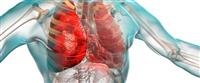
Pulmonary fibrosis (literally "scarring of the lungs") is a respiratory disease in which scar tissue forms in the lung, leading to serious breathing problems. The formation of this scar by an accumulation of excess fibrous connective tissue (called fibrosis) leads to thickening of the walls and a decrease in the amount of oxygen in the blood, as a result of which patients experience persistent shortness of breath. In some patients, the specific cause of the disease can be diagnosed, but in others The possible cause can''t be determined, a condition called idiopathic pulmonary fibrosis. There is no known cure for scarring and lung damage due to pulmonary fibrosis.
Symptoms
The main symptoms of pulmonary fibrosis are
Shortness of breath, especially with exertion
Chronic dry cough
stress and weakness
pain in chest
Loss of appetite and rapid weight loss
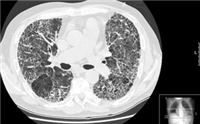
A history of progressive shortness of breath with exertion indicates pulmonary fibrosis. Sometimes a cracker can be heard at the bases of the lung on auscultation, and a chest X-ray may be normal or abnormal, but a high-resolution CT scan will often show anomalies.
the reasons
Crystal Clear app kdict.png Main article: Interstitial lung disease
Pulmonary fibrosis may be a secondary effect of other diseases. Most of these diseases are classified as interstitial lung diseases. Examples include autoimmune diseases, viral infections, bacterial infections such as tuberculosis that may cause fibrous changes in both the upper or lower lobes of the lung and other microscopic injuries of the lung. However, pulmonary fibrosis can also appear without any known cause in which case it is called "idiopathic".
Most of the idiopathic cases are diagnosed as idiopathic pulmonary fibrosis. Either way, there is a growing body of evidence suggesting a genetic predisposition in a subset of patients. For example, a mutation in the surface SP-C protein has been found in some families with a history of pulmonary fibrosis. Predominant mutations in the TERC or TERT genes, which encode telomerase, have been identified in about 15 percent of patients with pulmonary fibrosis. Diseases and conditions that may cause pulmonary fibrosis as a secondary effect include:
Inhalation of environmental and occupational pollutants, such as metals
In asbestosis, silicosis, and exposure to some gases. Coal miners, ship workers, and sand blasters are at greater risk.
Pulmonary hypersensitivity infection, often caused by inhalation of dust contaminated with bacterial, fungal, or animal products.
Cigarette smoking can increase the risk or make the disease worse.
some common connective tissue diseases,
Such as rheumatoid arthritis, systemic lupus erythematosus, and scleroderma.
Other diseases that involve connective tissue, such as sarcoidosis and granulomatosis.
infection.
certain medicines, eg amiodarone, bleomycin (Pingyangmycin), busulfan, methotrexate,
Apomorphine, and nitrofurantoin.
Chest radiotherapy.
The way the disease develops
Crystal Clear app kdict.png Main article: Fibrosis
Pulmonary fibrosis involves a gradual exchange of normal lung parenchyma with fibrotic tissue. Replacing the normal lung with scar tissue results in an irreversible decrease in the ability to diffuse oxygen, and the resulting stiffness makes pulmonary fibrosis a restrictive lung disease.
Pulmonary fibrosis is persisted by abnormal wound healing, rather than chronic inflammation, and is the main cause of restrictive lung disease. In contrast, quadriplegia and kyphosis are considered
Examples of causes of restrictive lung disease that do not necessarily include pulmonary fibrosis.
Diagnosis
CT scan of the lung indicative of extensive fibrosis due to usual interstitial pneumonitis. There is also a large air bubble.
The diagnosis can be confirmed by lung biopsy.
It may be necessary to obtain enough tissue for an accurate examination by obtaining a wedge-shaped biopsy using an endoscope under general anaesthesia. This type of biopsy involves placing several tubes through the chest wall, one of which is used to cut a portion of the lung for evaluation. Examination under a microscope to confirm the presence and pattern of fibrosis, as well as the presence of other characteristics that may indicate a specific cause. Misdiagnosis is common Because while pulmonary fibrosis in general is not uncommon, not every type is uncommon, and evaluation of patients with these diseases is complex and requires a multidisciplinary approach. The terminology has been standardized but there are still difficulties with its application, even experts may differ in classifying some cases. On a spirometer as restrictive lung disease, both FEV1 (forced expiratory volume in 1 second) and FVC (forced vital capacity) are reduced to FEV1 /FVC is normal or even increased in contrast to obstructive lung disease, where this ratio is reduced, and residual air volume values and total lung capacity are usually decreased in restrictive lung disease.
treatment
Pulmonary fibrosis s scar tissue in the lung, and the scarring is permanent when it develops.
Delaying the progression and preventing it depends on the underlying cause
Treatment options for idiopathic pulmonary fibrosis are very limited. Despite ongoing research trials, there is no evidence that any medications can significantly help this condition, and a lung transplant is the only treatment option available in severe cases. Since some types of pulmonary fibrosis can respond to corticosteroids (such as prednisone) and/or other medications that suppress the body''s immune system, these types of medications are sometimes prescribed in an attempt to slow down the processes that lead to fibrosis.
The immune system is thought to play a central role in the development of many forms of pulmonary fibrosis. The goal of treatment with immunosuppressive agents such as corticosteroids is to reduce lung inflammation and subsequent scarring. Responses to treatment are variable. Those who improve with immune suppression therapy may not have idiopathic pulmonary fibrosis, as idiopathic pulmonary fibrosis has no cure.
Two drugs intended to prevent scarring in simple idiopathic fibrosis are pirfenidone, which reduces the rate of decrease in forced vital capacity per year, and also reduces distances reduction in a 6-minute walk test, but has no effect on respiratory symptoms,
The second drug is nintedanib, which acts as an antibiotic by inhibiting a variety of receptor tyrosine kinases (including platelet-derived growth factor, fibroblast growth factor, and vascular endothelial growth factor). Lung and acute exacerbation of the condition.
NSAIDs have only a limited role in reducing the fibrosis process. Some other types of fibrosis, such as non-specific interstitial pneumonia, may respond to immunosuppressive therapy, such as corticosteroids. However, only a minority of patients respond to corticosteroids alone Therefore, additional immunosuppressants such as cyclophosphamide, azathioprine, methotrexate, penicillamine, and cyclosporine can be used. Colchicine has also been used in treatment, but its role is limited.
There are ongoing trials with new drugs, such as gamma interferon.
Pneumonia, a less severe form of pulmonary fibrosis, is prevented from getting worse by avoiding contact with the causative agents.
Oxygen therapy improves quality of life and exercise capacity, and lung transplantation may be considered for some patients.
Anticipate the course of the disease
Lung in the end stage of pulmonary fibrosis during autopsy
Hypoxia caused by pulmonary fibrosis can lead to pulmonary hypertension, which in turn can lead to heart failure in the right ventricle. Hypoxia can be prevented by providing the patient with oxygen.
Pulmonary fibrosis may also increase the risk of pulmonary emboli, which can be prevented by anticoagulants.