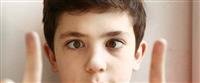
What is a squint?
A “squint” is the common name for ‘strabismus’ which is the medical term used to describe eyes that are not pointing in the same direction, or which are misaligned. Squints are also sometimes called ‘lazy eye’, to refer to a turned eye, but this is not an accurate description. Squints can be classified according to the direction of the turn of the eye: esotropia (convergent) refers to an eye that turns inwards towards the nose exotropia (divergent) refers to an eye that points outwards hypertropia is when the eye is in an upward direction.
Types of squint
The squint may be present all or only part of the time, in only one eye or nating between the two eyes.
A squint can occur for a number of reasons
Refractive (focusing) abnormality
Eye muscle imbalance
It can run in families
Illness can make it obvious
Fatigue, stress or extended work load
Injury
Rarely, it can be due to other diseases or illness
Early detection and treatment especially in children is important to prevent the development of "lazy eye". If you have a family history of squints or are concerned that your child may have a squint, do consult your eye doctor early for a thorough assessment.
Squints may manifest as the persistent turning of the head to look at objects, difficulties in hand and eye coordination, ascending or descending stairs or kerbs, crossing the street, driving, various sports and other activities of daily living which require stereopsis and peripheral vision, clumsiness or tendency to bump into objects and or people.