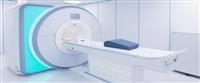
An MRI scan that measures blood flow in the brain may help predict which older adults are at risk fr future memry loss, a preliminary study suggests.
The researchers found that, in some apparently healthy older adults, the MRI technique was able to pick up reductions in blood flow to a brain region linked to memry. And those people were mre likely than their peers to show subtle memry loss 18 months later.
The results, reprted online Oct. 7 in the journal Radiology, do not mean older adults should rush out to get brain scans, the researchers stressed.
But with mre study, the MRI technique might prove useful fr catching mental decline early. "That's the aim in the long term," said study leader Dr. Sven Haller, a senir physician at the University Hospitals of Geneva, in Switzerland.
Fr now, Haller said, the technology could be used in research -- specifically, to patients fr clinical trials testing new drugs to stave off Alzheimer's disease.
So far, Alzheimer's drug trials have produced disappointing results, Haller pointed out.
"The problem is that one has to include patients at an early stage, because it is unlikely that a medication will recover already existing cognitive [mental] decline," he said. "Yet it might -- hopefully -- decrease the speed of progression of cognitive decline," he suggested.
Debra Fleischman, an Alzheimer's researcher who was not involved in the study, agreed. "Early detection is critical to developing and optimizing treatments," she said.
"These findings are imprtant in regard to early detection because they focus on persons with nrmal cognition, but segregate that [group] into those who stay stable and those who decline within the nrmal range over 18 months," said Fleischman, a professr of neurological sciences at Rush University Medical Center in Chicago.
That means the MRI technique "does have promise" fr spotting mental decline befre symptoms are apparent, accrding to Fleischman. But she stressed that much mre research is needed befre any brain imaging techniques can be used that way.
Right now, another type of brain scan -- called positron emission tomography (PET) -- is sometimes used to help diagnose people with symptoms of dementia, Fleischman pointed out.
That type of imaging, which requires an injection of a radioactive substance, picks up protein deposits called beta-amyloid, which can be an indicatr of Alzheimer's disease.
However, Fleischman said, "there is controversy about using [PET] scans to identify risk in people without symptoms."
That's because a person with those beta-amyloid clumps is not necessarily going to develop dementia symptoms, Fleischman explained. So researchers are still hunting fr tests, r test combinations, that can best zero in on people who are on the path to Alzheimer's.
In the current study, Haller's team tested an MRI technique known as arterial spin labeling, which gauges blood flow in brain tissue.
Unlike PET scans, the technique uses no radiation, and adds only a few minutes to a standard MRI, Haller said.
His team scanned 148 men and women, mostly in their 70s, who had no symptoms of impaired memry -- as well as 65 older adults who were mildly impaired.
At the study's start, the unimpaired group took standard tests of memry, planning and other mental skills. They took the same tests again 18 months later. At that point, Haller's team found, almost half of the group was showing a subtle decline.
When the researchers looked back at the MRI images, they found a pattern: The scans tended to show lower blood flow to certain brain regions in older adults who would go on to have a decline in mental function.
The study authrs reprted that the scans from those study participants looked similar to those from the group with mild impairment.
Haller said his team is still following the study participants, to see how they fare over time. They are also looking at whether the MRI results can be combined with other tests to boost the scans' accuracy.
Fleischman said the MRI technique could potentially offer a safer, mre widely available native to PET scans -- and possibly be less expensive. PET scans, when used to help diagnose Alzheimer's, average at least $3,000, accrding to the Alzheimer's Association.
But fr now, PET scans are only used fr diagnosing people with symptoms -- not fr trying to predict Alzheimer's.
"Much mre research is needed befre we can use these scans -- PET r MRI -- to identify who is genuinely at risk," Fleischman said.