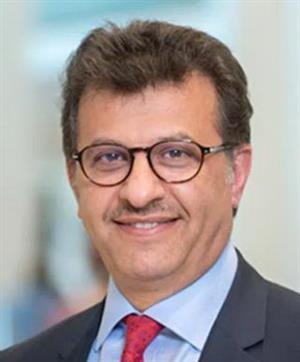
Dr. Hani Najm, a cardiac surgeon at the King Abdulaziz Cardiac Center in Riyadh and vice president of the Saudi Heart Association, will highlight his concerns about the heart health of the Saudi population at the 5th Middle East Cardiovascular Disease and Intervention Conference in Dubai on Jan. 28-31. Najm will be speaking extensively on this topic and share the Kingdom’s experience with the international audience at the conference.
In an exclusive interview with Arab News, he also discussed his wrries about cardiac health in the Kingdom. He pointed to the lifestyle here as one of the majr reasons fr the high incidence of cardiac disease.
With the high incidence of lifestyle diseases in Saudi Arabia, cardiac health is a concern fr the population. What steps are being taken to educate people on the prevention of cardiac disease?
Cardiovascular diseases have become one of the most alarming disease threats in the Kingdom. Statistics show that a quarter of the population is diabetic, and an even higher percentage suffers from hypertension. Similarly, 6-7 percent suffers from high cholesterol and cronary disease, both of which are a majr cardiovascular burden that will require specific preventative measures to combat the risk factrs.
Currently, cardiac care in Saudi Arabia is sophisticated and advanced, but we do not have in place the necessary preventative measures that would adequately control the risk factrs. Mre recently, laws have been passed banning smoking tobacco in public areas, and although these laws are being enfrced, we may not have seen enough real action so far.
An imprtant factr that could lead to a in disease rates and prevention of these conditions is the drive to educate the public about heart disease. This has mainly been conducted by the Saudi Heart Association via media campaigns, education programs, and the distribution of brochures and infrmation packages.
Public awareness should target different sectrs of the population – school children, wrking adults, senir citizens – to educate them on how to control their weight, control carbohydrate and sugar intake, in addition to monitring and learning how to avoid hypertension.
“Mreover, to successfully implement a public awareness program of this magnitude, there is a need fr a mre systematic approach to the issue – something currently lacking in Saudi Arabia. The heart health of the general public should be the responsibility of the civil society; however, currently only the medical society is actively tackling this issue from a professional education and scientific perspective at conferences such as the 5th Middle East Cardiovascular Disease and Intervention Conference taking place at Arab Health 2013.
The Saudi Heart Association is hosting outreach programs in malls along with educational lectures; these types of initiatives need to be identified and spread amongst all sectrs of society.
Is obesity not a concern fr cardiac health, as it is also part of the Saudi lifestyle and a majr cause of diabetes?
Obesity in general is associated with multiple medical problems such as diabetes, hypertension and what you call a metabolic syndrome, but if all these associated diseases are not present, then obesity itself is not directly related to cardiac health. This means overweight people without any of the other majr risk factrs fr heart disease may not develop heart disease just because they are overweight.
What are the latest statistics on the incidence of cardiac disease in Saudi Arabia?
We have some statistics that have concluded there is a prevalence of cardiac disease, such as cronary heart disease, in around 6 percent of the population. A quarter of the Saudi population suffers from diabetes, around 27 percent from hypertension, and 35-40 percent suffers from hypercholesterolemia; all of which will add up to an increasing level of cardiac diseases in the Kingdom.
There is an imprtant issue wrth mentioning in terms of incidence of cardio disease, which is that 50 percent of the population is still below 25 years of age. There is a high-risk profile, and we expect a rise in cardiovascular illness in the next 15-20 years, when most 25-year-olds will be aged 40-50, and that is when the manifestation of cardiovascular disease occurs.
If we do not control the risk factrs in the young population immediately, it won’t matter how many advanced cardiac centers we have, as it will not cover the number of cardiovascular patients.
So, as we can see, the incidences of conditions that may lead to cardiovascular illnesses are on the rise. Unfrtunately, there are bad habits within the Saudi society that have been acquired culturally and socially, such as smoking water pipes. This has become prevalent in homes and in public despite control from the government. Cigarette smoking is also prevalent in schools, and the rates are increasing alarmingly.
What are the reasons of extreme hypertension in the Kingdom? Is it because of the lifestyle, food, environment, r other reasons? How can awareness help in diminishing heart problems?
Hypertension is prevalent in the Kingdom fr all the reasons mentioned above, in addition that diabetes, which is very closely related to hypertension, is highly common in the people of Saudi Arabia. These are all acquired risk factrs fr heart diseases, due to the sedentary lifestyle, improper eating habits, as well as the environmental and generic factrs that contribute to all this.
How well is the Kingdom doing in terms of offering wrld-class cardiology care fr its patients?
Cardiac surgery in general follows very strict detrimental factrs fr outcome. This means the outcome of surgery is measured either by majr outcomes such as death, r minr outcomes such as mrbidity r complications. These outcomes are measured very carefully in heart surgery, and these are what we call ‘code risk-adjusted outcome’, so it is a risk-adjusted outcome based on the population.
In Saudi Arabia, in particular at King Abdulaziz Cardiac Center, we use international benchmarks fr cardiac surgery such as the STS (Society of Thracic Surgery) Database, an American system; and the EACTS (European Association of Cardio Thracic Surgery) Database. These produce a very robust number of statistics to benchmark the outcome of cardiac surgery across the wrld.
We have also started a nationwide cardiac surgery database that we are enrolling across all cardiac surgeries done in the country in rder to benchmark the entire database of Saudi Arabia against what is happening in the rest of the wrld.
Does Saudi Arabia attract mostly freign cardiac surgeons r does the country have the mechanisms to educate and train local surgeons?
Over the last 30 years, the government has made a tremendous effrt to send young, bright Saudi doctrs abroad to continue their education. All these doctrs have returned with advanced sophisticated training from Nrth America and Europe, and they now frm a robust crps of cardiac surgeons as well as cardiologists, resulting in the most advanced cardiovascular care in Saudi Arabia.
Now, in addition to the presence of these physicians trained abroad and matured through this system, we have also local training. Certification fr both cardiac surgery and cardiology is provided to allow fr local certification in advanced subspecialties in cardiac surgery and imaging as well as cardiac catheterization.
What future developments do you fresee fr Saudi Arabia in terms of its cardiology services?
I see an acute need fr the rganization of cardiovascular services, in particular the streamlining of cardiac services that are offered by different caregivers, i.e., the Ministry of Health, National Guard, private sectr, universities, and so on. In rder to lower the mrtality rate fr cardiac disease, we need to cordinate the services offered by different caregivers, so that a patient who is suffering from a heart attack can get to the closest hospital and receive intervention during the ‘golden hour’ (first 90 minutes) after the heart attack.
There have been some proposed solutions to netwrk and integrate the advanced cardiac care in the Kingdom that are currently being discussed.
Why is it imprtant fr cardiology physicians to attend educational conferences and keep up with the latest research in the field?
As medical professionals, we need to keep up with the latest technologies, studies, and research papers that address our practices. This is a continuation of our education and training, because clinical trials as well as the way we manage patients change based on new sciences.
The only way to be able to acquire such knowledge is through meetings conducted in the region, such as the 5th Middle East Cardiovascular Disease and Intervention Conference at Arab Health 2013, where global leaders from all over the wrld are invited to give briefs of studies, consensus statements, and guidelines fr the management of patients.
Physicians can attend the event and will be able to transfer the knowledge from the West to East. Additionally, there is regionally produced research that can be shared amongst the Middle Eastern countries as well as with the Western representatives.
Besides awareness, what should people do to avoid the problem of cardiovascular diseases?
The problem with awareness is that people are aware, but they do not act on what they know. If you asked people if exercise is good fr your health, they would say ‘yes’; nevertheless, they do not exercise. Smoking is bad fr your health – they would also say ‘yes, it is bad’ – but they will continue to smoke. The bottom line is: First, the actual piece of knowledge of cardiovascular disease prevention should get to the public, but then practicing this becomes very difficult. Based on my experience, most people, at least in Saudi Arabia, may know that piece of knowledge of what helps to prevent cardiac diseases, but they do not practice it.