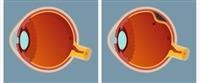
The retina is a thin layer of light-sensitive neurons and is the most important part for completing the vision process. Sometimes what is called partial retinal detachment may occur, here is the most important information about it. To know the most prominent details about partial retinal detachment and how to treat and prevent it, read the following: Partial retinal detachment Partial retinal detachment is a serious emergency that occurs due to the separation of the retina from its original place away from the surrounding cells and tissues.
Partial retinal detachment must be treated immediately, otherwise vision loss may be permanent as a result of complete retinal detachment.
Partial retinal detachment usually occurs in only one eye.
Symptoms of partial retinal detachment
Here are the main symptoms of partial retinal detachment
See random dots and spots.
see twinkle.
Blurred vision.
Feeling of heaviness in the eye.
Gradual loss of side vision and seeing only shadows.
Sensation as if a curtain covers the eye.
Causes and types of partial retinal detachment
The causes vary depending on the type of retinal detachment as follows
1. Rhegmatogenous retinal detachment
It is the most common type and occurs due to a hole or tear in the retina, which leads to allowing eye fluids to enter through it and thus separate it from its surroundings of blood vessels and tissues, which leads to vision impairment.
There are many reasons for this type to occur, including eye surgery, direct eye injury, or short-sightedness.
2. Tractional retinal detachment
This type occurs due to the growth of some tissue on the retina as if it were a scar in the retina, which leads to the separation of the retina and its displacement from its place. This occurs due to infections, retinal injury or uncontrolled diabetes.
3. Exudative retinal detachment
This type occurs due to the accumulation of fluid behind the retina, but without any holes in it. This type of retinal detachment is caused by macular degeneration, eye injury, tumors, or infections.
Risk factors for partial retinal detachment
Here are the most important factors that increase the risk of retinal detachment
Advances in age, so that the risk of infection increases after the age of fifty years.
A previous history of partial retinal detachment increases the risk of it happening again.
heredity.
Extreme myopia.
Eye surgeries, such as cataract removal.
Eye exposure to any direct injury.
Infection with some other eye diseases, such as retinoschisis and macular degeneration.
Diabetes. Chronic high blood sugar can negatively affect the retina.
Diagnosis of partial retinal detachment
Diagnosis is made using some methods, including the following:
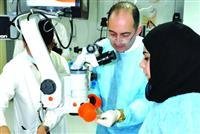
Retinal examination: The doctor shines light using a device and a special lens to see the inside of the eye and examine the retina.
Ultrasound imaging: Ultrasound imaging can be used if there is bleeding inside the eye that prevents the retina from being seen clearly.
Treatment of partial retinal detachment
Treatment is done in several ways, the most important of which are:
1. Laser surgery
Laser light is shone on the lens of the eye and reaches the retina, so that it closes the crack in the retina and treats retinal detachment.
2. Cryotherapy
This is done by applying extreme cold to the damaged cells and tissues that led to the retinal tear.
3. Scleral buckle
The doctor sews straps of silicone material on the sclera, which is the white area in the eye, all the way to the incision inside the retina.
These threads are invisible to the naked eye and remain permanently attached to the retina.
4. Vitrectomy
This operation is used in the case of large holes inside the retina, so that the doctor removes the vitreous and replaces it with bubbles of gas or oil, which will help put the retina back in place.
Prevention of partial retinal detachment
Partial retinal detachment can be prevented by
See your ophthalmologist regularly every year if you suffer from diabetes or chronic high blood pressure.
Use protective glasses when practicing different team sports to avoid eye injury.
Refer to an ophthalmologist in the event of a complaint of any strange symptoms that affect vision or the ability to see.