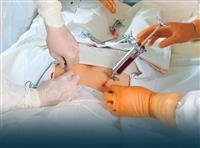

What is the cure rate for lymphoma? What are the treatment methods used? Continue reading the following article to get the answer to these questions. What is the cure rate for lymphoma? How is the treatment done? Here''s the most important information in this article: Lymphoma recovery rate Lymphoma is a treatable type of cancer, especially if the disease is detected in the early stages.
The cure rate depends on several factors, including the following
patient age.
Gradation and stage of disease.
The severity and hostility of the cancer cells.
The percentage of the enzyme lactate dehydrogenase (LDH) in the blood.
The patient''s general health.
Lymphoma includes several types, Hodgkin lymphoma and Non-Hodgkin lymphoma are the most common types, with a high cure rate.
As the survival rate and cure rate for Hodgkin''s lymphoma for five years is approximately 80%, and this percentage increases whenever the disease is discovered in the early stages, so that the percentage may then reach 92%.
While the cure rate for non-Hodgkin lymphoma for five years is approximately 72%, the percentage may vary depending on various factors.
Lymphoma treatment
Choosing the right treatment and the cure rate for lymphoma depends on several factors, including:
patient age.
disease stage.
The extent of the disease.
The patient''s general health.
There are several treatment options used in the treatment of lymphoma, including the following:
1. Chemotherapy
Chemotherapy is the main treatment for lymphoma, and it can be used alone or in combination with radiotherapy or steroids.
Chemotherapy can be given intravenously, or it may be in the form of a pill.
The problem with chemotherapy is the annoying side effects it causes to the patient, and these side effects include the following:
general fatigue.
Breathing difficulty.
Increased risk of infection and inflammation.
Easy bleeding.
Nausea and vomiting.
Loss of appetite and diarrhea.
mouth ulcers
hair loss
Skin rash.
infertility.
2. Radiation therapy
Radiotherapy is often used in the early stages of lymphoma and to increase the cure rate for lymphoma.
It is worth noting that radiotherapy does not cause pain, but it may lead to some side effects, including the following:
general fatigue.
Nausea and vomiting.
Dry mouth.
Anorexia.
3. Steroid medications
Steroids are used in addition to chemotherapy in advanced cases of Hodgkin''s cancer, especially when the disease has not responded to the first treatment option.
Steroids are given by intravenous injection in conjunction with chemotherapy, and may lead to some side effects that fade away if treatment is stopped, including the following:
Increased appetite and weight gain.
Indigestion.
sleep disturbance
Mood disorder and its loneliness.
4. Rituximab
It is one of the biological medicines whose principle of action depends on binding to cancer cells, and then stimulating the immune system to fight and kill them.
Rituximab is used in rare cases for a type of lymphoma in combination with chemotherapy.
Rituximab is injected intravenously, and it may lead to some side effects, including
Flu-like symptoms, such as: headache, high temperature, and muscle pain.
general fatigue.
Nausea.
Diarrhea.
5. Brentuximab vedotin
It is one of the newer therapies, which is used to treat a certain type of Hodgkin cancer.
It is given intravenously, and it may lead to some side effects, including the following
rash.
shortness of breath.
Cough.
High fever and chills.
Back Pains.
a headache.
Nausea and vomiting.
6. Bone marrow transplant
In some cases, a new bone marrow transplant is used to treat lymphoma, or what is known as a stem cell transplant.
This is done through the following
Use of chemotherapy or radiation to suppress bone marrow suppression.
Infusion of healthy bone marrow stem cells obtained from the patient himself or from a donor.
Stem cells build new bone marrow.
Factors that increase the risk of lymphoma
After identifying the cure rate for lymphoma, we note that there are some factors that may increase the risk of developing lymphoma, including:
Age: Some types of lymphoma are more common in young adults and children, and some types are more common in people over the age of 55.
Gender: The risk of lymphoma is increased in males.
Immunodeficiency: The risk is higher in people with weakened immunity.
Infection with some types of infection, such as: Epstein-Barr virus, or Helicobacter pylori.