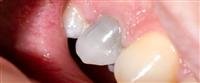
Renovations in the field of dental implants are non-stop, and include immediate implantation, immediate implantation, and the use of computers in dental implantation. There are several modern and advanced methods in the field of dentures. In cases where there are no teeth, dental implants are considered an aesthetic solution and an acceptable method for dental rehabilitation. It can be placed between the natural teeth without having to involve these teeth in the reconstruction process.
While the process of placing a normal dental bridge requires sharpening the healthy teeth to support the bridge In this case, healthy teeth are damaged and the patient may need to undergo root canal treatment in the future.
Stages of treatment
1. The implant stage, in which the artificial tooth is ed into the jawbone.
2. The stage of the structure, which is screwed into the implant and exits from it above the border of the jaw.
3. Reconstruction stage (for one or more teeth), which is installed over the structure.
Implantation involves the surgical procedure by which the implant is ed into the jawbone. After that, a waiting period of 3 months (in cases of the lower jaw) and approximately 6 months (in cases of the upper jaw) is required.
The waiting period is necessary, as this period enables the body to rebuild the jaw bone and the process of narrowing around the implant (a process called osteointegration).
After the waiting period is over, the jaws have covered the implant so that it is not visible at all in the oral cavity. At this stage it becomes possible to connect the structure to it and the process of preparing for the reconstruction can begin.
Fixation of artificial teeth
The durability and stability of detachable prostheses is greatly improved by implantation. With the help of 2-4 implants, the detachable teeth are connected to them with the help of special connections, and the durability and stability of the teeth can be improved. This leads to an increase in the patient''s quality of life due to the increase in his self-confidence and a significant increase in his function with artificial teeth.
Renovations in the field of dental installation
Immediate implantation
Immediate implantation after tooth extraction. As the implant is ed into the cavity caused by the extraction, the teeth and jaw surrounding the extracted tooth are preserved without going through an accelerated absorption process, and thus the patient does not need to undergo additional surgery. This method is not suitable for all cases, but its results are excellent if it is performed by an experienced doctor, and the chances of the body accepting the implant are similar to those we see in normal implants.
Immediate function
One of the methods of implantation depends on not waiting for 3-6 months to receive the implant, and then rebuilding on top of it. This method by which one or more implants are fitted and reconstructed directly or close to the implantation date without waiting, is called immediate placement. This method has been successfully done for several years. In recent years, this method has also been performed in cases of a single implant that supports the crown, in addition to being performed in cases of multiple implants supported by the fixed reconstruction of the entire jaw, and not only in cases of the lower jaw. This method of treatment can only be undertaken when several specific clinical conditions are met, and the dentist should take them into consideration and think about them seriously. The advantages of this method are clear: eliminating the surgical procedure through which the implant is exposed, shortening the duration of the treatment that includes the installation of fixed artificial teeth on the same day of implant placement without the need for detachable artificial teeth at any stage of treatment. These preferences greatly improve the patient''s acceptance of the idea of undergoing implant therapy.
Computer-guided implantation
It is one of the most recent innovations in the field of dental implants. It is a computer program that analyzes the CT image of the implant area and enables the physician and implant staff to pre-plan the exact placement of the implant in the bone according to anatomical considerations, for example: the amount and shape of the bone, and orthopedic considerations for the type and shape of the reconstruction that will be supported in the future by the implant. At the end of the layout, the information is transmitted to a computerized lathe, which then prepares the splint with holes at the exact location planned for the implant holes in the bone.
In some cases, this personal splint can be placed over the jaws of the patient, after numbing him with an ordinary anesthetic injection, and making holes in which the implant will be placed through the jaws. When there is the possibility of doing this method of implantation, there is no need to use a scalpel, and thus we refrain from lifting the jaws from the bone. The treatment time is greatly shortened and the recovery is easier and faster without stitches. This method certainly reflects the trend that is gradually increasing in the field of transplantation, and it can be said with certainty that the future has become present in this field.