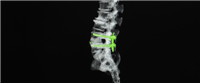
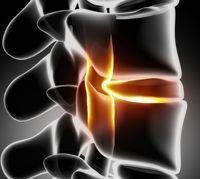
The disc between the vertebrae consists of an external part called the annulus and an internal one called the nucleus, and its function is to provide a certain measure of movement and stability, as the herniated disc occurs as a result of increased pressure on it due to a sudden or continuous mechanical load, and by sliding from its place, the disc presses on the root nerve in this place. The sciatic herniated disc is most common between the fourth and fifth vertebrae, and the main sign of this is reflected in the appearance of pain in the foot along the affected nerve, i.e. sciatica.
Events that increase pressure in the spinal canal, such as: laughing and coughing, exacerbate the pain, and the pain subsides when the patient relaxes and bends the hip and knee, and most often the pain occurs in the back, but it is not the main component, as there may be sensory disturbances and weakness in the foot in the parts that are innervated Through the affected nerve, in addition to disturbances in controlling urination.
Lumbar disc symptoms
Common signs include pain that
It may be in the lower back, buttocks, or upper thighs.
It comes and goes where it can be bothersome or severe, and it can last from a few days to a few months.
It feels worse when you sit, and better when you move and walk.
Feel bad when bending, lifting or twisting.
Get better when changing positions or lying down.
It leads to numbness or tingling in your arms or legs.
Causes and risk factors for herniated disc
Spinal discs wear down as a normal part of aging, especially after the age of 40. Most people experience some disc degeneration, though not everyone experiences pain. You might feel pain if your discs:
1. Drying of the discs of the spine
Your discs have a soft core that contains mostly water. As you age, this core naturally loses some water. As a result, discs become thinner and don''t provide as much shock-absorbing capacity as they once did.
2. Cracked or ruptured discs of the spine
Minor injuries can lead to small cracks in the discs of the spine, and these cracks are often near the nerves, as the cracks can be painful even if they are minor.
If the outer wall of the intervertebral disc opens, the disc may bulge into place known as a herniated disc, which may press on the spinal nerve.
Complications of a herniated disc
In most cases of degenerative disc disease, the condition can be controlled under the close supervision of a doctor so that it does not usually worsen and cause other problems, but in some cases it can cause complications, such as:
Herniated disc.
Loss of bladder or bowel control.
Weakness or tingling in one or both legs.
Pain in one or both legs.
Osteoarthritis in the back.
severe pain
Diagnosis of herniated disc
The most prominent methods of diagnosis include the following
1. Physical examination
To diagnose degenerative disc disease, your health care provider may start by asking about your symptoms. Questions may include:
When does the pain begin?
Where do you feel the pain?
What activities cause the most pain?
What activities reduce pain?
Have you had an injury or accident that caused you pain?
Do you have other symptoms, such as tingling or numbness?
How far can you walk?
2. Photography
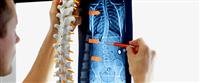
Your healthcare provider may use imaging tests, such as X-rays, CT scans or MRI scans. These tests can show your healthcare provider the condition and alignment of your discs.
3. Examination of nerve function
Your provider may use a reflex hammer to check your reflexes, as a weak reflex or no reaction may mean that you have damaged or pinched nerves.
4. Pain levels
Your provider may touch you or press on certain areas of your back to gauge your pain levels.
Back disc treatment
The most prominent methods of treatment include the following
1. Pharmacotherapy
Over-the-counter pain relievers such as aspirin and ibuprofen can help fight inflammation, as they can relieve pain and reduce swelling, and your doctor may prescribe stronger pain medication if you need it.
2. Physical therapy
Since there are specific movements that make your neck and back muscles stronger and more flexible and this supports the spine, in most cases physical therapy and pain relievers are enough to relieve the pain in the long run.
3. Steroid
These contain powerful medications to reduce pain, swelling, and inflammation. Your doctor may suggest that you take an injection into the epidural area of your back, or into the fluid-filled area around your spinal cord.
4. Surgical treatment
If other treatments don''t work, your doctor may recommend a surgery called a discectomy. The affected part of the disc is removed. This helps relieve pressure on your nerves.
In some cases, your doctor may remove the entire disc and place an artificial disc in it. If you have a serious problem, your doctor may fuse bones into your spine after removing the disc.
Back disc prevention
You can prevent or slow the progression of spinal degeneration through lifestyle changes. Some of these include:
Reaching and maintaining a healthy weight.
Avoid or quit smoking.
Exercising regularly to increase strength and flexibility.