
highlights
Lower jaw progression is a common problem that causes many damages. Learn how to treat and why it occurs in this article.
All you need to know about mandibular prognathism is as follows
Lower jaw advancement
It is an extension or protrusion of the lower jaw, which occurs when the teeth are not aligned to each other properly due to the shape of the facial bones.
This negatively affects breathing, speaking, appearance, biting, and chewing.
Reasons for advancing the lower jaw
The advancement of the lower jaw affects all ages and people, and it has been proven that it is caused by several factors, including the following:
Genetic factors, such as: the presence of a genetic factor for jaw protrusion.
Medical conditions or a genetic disorder, such as Down syndrome or Crouzon.
Growth hormone disorders, such as: gigantism, or acromegaly that causes excessive jaw growth.
Diagnosis of mandibular advancement
In addition to asking the patient about the symptoms and difficulties he is experiencing, the patient may be asked for a set of diagnostic tests in order to more accurately determine the severity of the condition, such as:
X-ray of the entire skull.
Dental panoramic x-ray.
Bite imprint to build a template.
Treatment of the advancement of the lower jaw
During the diagnosis of mandibular advancement, the maxillofacial surgeon evaluates any associated symptoms, such as: difficulty breathing, difficulty speaking and eating, and identifies any other symptoms associated with jaw progression because jaw protrusion may be associated with serious medical problems before moving on to treat mandibular advancement.
Mandibular advancement is treated in the following ways
1. Surgery
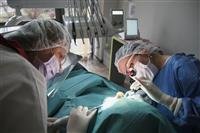
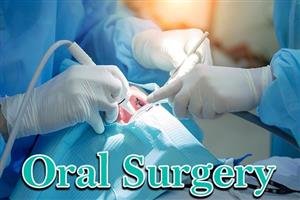
Mandibular advancement is treated by performing jaw surgery in addition to orthodontics, in order to correct the imbalance caused by the advancement of the lower jaw.
Depending on the type and severity of the condition, the doctor decides the need for surgical modification of one or both jaws.
During the surgery, the surgeon removes parts of the jawbone, and then holds the jaw in place with plates, screws, or wires.
The patient may need to wear braces before and after surgery to stimulate the teeth to move to their new positions.
2. Treatment of health conditions associated with mandibular advancement
If mandibular progression is associated with medical conditions, the doctor may recommend other treatments to control it, such as:
Acromegaly
Treatment for acromegaly aims to reduce growth hormone production and reduce the negative effects of the tumor on the pituitary gland and surrounding tissues.
Acromegaly is treated through the following
The use of medications, such as: drugs to reduce the production of growth hormone, or drugs to prevent its effect on its receptors.
Surgery to remove pituitary tumors.
Radiotherapy if cancer cells remain after surgery, because radiotherapy kills remaining cancer cells and reduces growth hormone production.
Gorlin''s syndrome
Gorlin syndrome is a genetic syndrome that affects many parts of the body and increases the risk of developing cancerous and non-cancerous tumors.
The treatment plan depends on the parts of the body affected, and treatment may include surgery to remove the jaw cysts.
Archelis Graham Syndrome
Or what is known as enlarged veins is a genetic disorder that affects the bones of the face.
It is treated depending on the symptoms that appeared on the patient, the doctor may recommend surgery to correct bone deformities, and the doctor may prescribe nutritional supplements to promote growth and others.
Post-operative mandibular advancement treatment
The patient needs to follow a diet for 6 weeks after the mandibular advancement surgery, because the initial jaw healing takes about 6 weeks, while the full recovery takes 12 weeks.
The doctor also recommends some instructions, as follows
Oral hygiene instructions.
Avoid strenuous activities.
Take some medications to control the pain.
Avoid smoking.
Risks of surgery to treat mandibular advancement
There are some risks associated with the surgery, including the following
blood loss
Infection.
Jaw fracture.
Return of the jaw to its original position.
Loss of part of the jaw.
Pain and swelling after the operation.
Eating problems.