Is maxillary advancement a genetic problem? What are the ways to treat this problem? Can it be prevented? Read the article to find out the answer.
Maxillary prognathism is a problem that a person may be born with or may acquire as a result of some health conditions, which we will learn about in more detail in this article:
What are the causes of maxillary advancement?
The problem of the advancement of the upper jaw may be hereditary, such that the child is born with this jaw and is not related to a health problem. In other cases, it may be a sign of one of the following diseases:
1. Acromegaly
Acromegaly is a rare disease that affects 60 people per million, and is caused by the pituitary gland''s excessive secretion of growth hormone.
It results in enlargement of the limbs and organs, such as advancement of the upper jaw and other symptoms, such as:
Enlarged tongue and nose.
Sweating more.
Low vision or blurring.
Loss of sexual desire.
Headache.
Cases of this disease can be seen in the same family, but it is often not a hereditary disease, and it can cause some complications if it is not treated, such as: diabetes, high blood pressure, arthritis, and heart disease.
2. Basal cell nevus syndrome
This syndrome is rare, as it affects one person for every 31,000 people. It causes a number of symptoms, including advancement of the upper jaw, in addition to the following symptoms:
a big head.
Cleft lip.
Spacing between the eyes.
Spinal problems such as kyphosis.
A number of complications can also result if treatment of this syndrome is neglected, such as: vision loss, hearing loss, epilepsy, and mental disability.
3. Acrodysostosis
Limb dysostosis is characterized as a rare disease characterized by shortening of the limbs and the appearance of signs of the disease on the face, such as advancement of the upper jaw and a number of other symptoms, such as:
Short stature.
Shortening of the limbs.
Spinal curvature.
Small, upturned nose.
The distance between the eyes.
Small ears.
Hearing problems.
Mental disorder.
What are the symptoms of maxillary advancement?
Symptoms of maxillary advancement
Mismatch of upper and lower teeth.
Speech problems.
Problems with eating and chewing.
Breathing problems.
How is maxillary advancement treated?
The doctor treats this problem by
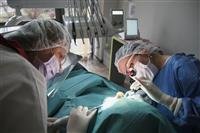
1. Surgery to modify the shape and size of the jaw
Through this surgery, he adjusts the shape of the jaw bones to give them a natural appearance. The jaw needs a period ranging from 9 months to a year to appear natural, while the recovery period ranges from one week to six weeks after the operation.
Specific foods are eaten by the doctor during the recovery period, and it is likely to eat normally after a maximum of six weeks if no complications arise. As for preventing jaw progression, it is not possible when the cause is hereditary.
2. Treating the cause
If the advancement of the upper jaw is due to a health problem, the doctor will request further treatments in addition to surgery, including:
Treatment of acromegaly: dispensing medications that limit the secretion of growth hormone. The cause may also be a tumor that the doctor will remove either by radiation or through surgery.
Treatment of basal cell nevus syndrome: Surgery if the cells are cancerous or developing a treatment plan based on the affected limb.
Treatment of limb dysostosis: dispensing nutritional supplements for bone growth, in addition to seeking assistance from an audiologist and speech-language pathologist.