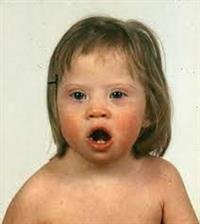
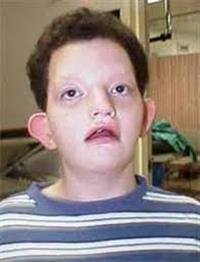
Wolf-Hirschhorn syndrome is a chromosomal deletion syndrome in which part of chromosome 4 is missing.
In Wolf-Hirschhorn syndrome, part of chromosome 4 is missing.
Children who survive into their 20s typically have severe disabilities. Many affected children die during infancy.
Symptoms of Wolf-Hirschhorn Syndrome
Symptoms of Wolf-Hirschhorn syndrome often include profound intellectual disability.
Children may also have epilepsy, a broad or beaked nose, scalp defects, drooping upper eyelids (ptosis) and gaps or fissures (colobomas) of the iris, cleft palate, and delayed bone development.
Boys may have undescended testes (cryptorchidism) and a misplaced opening of the urethra (hypospadias).
Some children have an immune deficiency, which means their body is less able to fight off infections.
Diagnosis of Wolf-Hirschhorn Syndrome
Chromosomal testing
The diagnosis of Wolf-Hirschhorn syndrome may be suspected by chromosomal testing before birth or by the child''''s physical characteristics after birth.
The diagnosis can be confirmed by chromosomal testing.
Treatment of Wolf-Hirschhorn Syndrome
Supportive care
Treatment of Wolf-Hirschhorn syndrome is supportive.