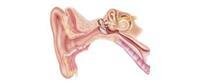

Eustachian tube is defined as small tubes that extend between the middle ear and the top of the throat, and is responsible for equalizing ear pressure and fluid drainage from the middle ear. It is possible for these small tubes to become obstructed for many reasons causing their disorder. [1], the symptoms that appear in people with osteochondrosis or disorder differ, and range from mild to severe, and if these symptoms persist for more than 14 days, see a doctor To determine the appropriate treatment, the most important of which can be explained as follows:
Feeling a blockage of the ear.
Feeling as if the ear is full of water.
Partial hearing loss.
An ear ring, or tinnitus (injury).
Hear in-ear sounds like clicking sound.
Feeling pain around the ear.
Disturbance of body balance.
Causes of inflammation of the Eustachian tube
There are many causes of Eustachian ductitis, and we mention some of the following
Upper respiratory infection caused by infection with the nasal virus (English: Rhinovirus), Influenza virus, adenovirus, or due to respiratory syncytial virus.
Distortions Such as cleft lip as it is called cleft palate, or any other facial abnormalities.
Gastroesophageal reflux.
Treatment of Eustachian tube problems
There are many treatments used in case of Eustachian ductitis, including the following
Home remedies
Among the procedures that the patient can follow, which in turn help to get rid of some of the symptoms that he suffers from are the following:
chewing gum.
Yawning.
Moving the mouth in a movement similar to that of swallowing food.
Breathe out through the nose, keeping in mind closing the mouth.
Use nasal saline spray.
Medicinal therapies
Among the drug options that can be used to treat Eustachian canal dysfunction, the choice of which depends on the condition:
Antihistamines, used if allergies are the cause of the condition, for example: Cetirizine, Diphenhydramine, or Loratadine.
NSAIDs (NSAIDs), as an ear pain reliever and a remedy for swelling.
Antibiotics: Antibiotics may be localized in the ear, or given orally, depending on inflammation, and in some cases steroid medications are added to the treatment plan