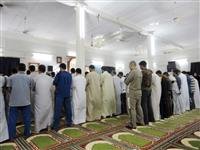
Fajr prayer
A study conducted by the University Center for Sleep Medicine and Research at King Saud University revealed that waking up for Fajr prayer does not negatively affect a person''s sleep quality or his physical and mental activity during the day.
Professor Ahmed bin Salem Bahamam, Director of the Center, announced that waking up for Fajr prayer does not negatively affect the quality of a person''s sleep or his physical and mental activity, pointing to the importance of early sleep and getting adequate sleep hours, especially for children and adolescents. Because lack of sleep causes the body''s immunity to weaken, increases its weight, raises the level of blood pressure, and may be related to the development of some types of tumors, God forbid, according to the akhbaar24 website.
Bahamam added that his announcement is based on a study carried out by the center on this fact, which consisted in following the sleep of a group of volunteers in two stages: in the first stage, the volunteers slept under close supervision until the dawn prayer, then they were awakened for prayer, and after the prayer they slept until the time of their work. And in the second stage, they were allowed to sleep continuously until the time of work, and it was taken into account that the duration of sleep was equal in the first and second stages, and after waking up, objective tests were performed to measure the increase in sleepiness throughout the day. He explained that the results of the study showed that the quality of sleep in the two phases did not differ, and that waking up for Fajr prayer and sleeping after that did not cause any increase in sleepiness during the daytime period, in addition to that waking up for Fajr prayer did not negatively affect the quality of sleep or activity during the day, indicating That there are no specific number of hours that can be considered as a person''s natural sleep hours Because it varies from person to person according to age.