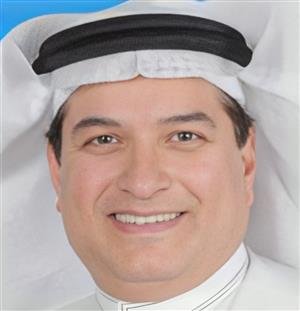

Dr. Abdel Zahir Saati, head of the orthopedics department and a consultant of orthopedic surgery, joints and sports medicine, Dr. Abd al-Zahir Saati, head of the orthopedics department and a consultant in orthopedic surgery and sports medicine, explained that the artificial knee joint is one of the most successful surgeries in the field of orthopedic surgery Al-Noor Specialized Hospital has a weekly change of two to three operations, and the number of operations that have been performed in the hospital reached about (800), and most of the two changes are made. This surgery is performed for patients with roughness that causes severe knee pain to prevent the patient from practicing his daily activities. Naturally, this surgery is considered a last resort after exhausting all treatment methods, the most important of which are conservative treatments.
Dr. Saati confirmed that most of the surgeries are for people between 60-70 years old and up to 45 years old
Roughness, its causes and methods of treatment
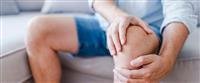
Dr. Abdel-Zahir Al-Khouhna was known as thinning the thickness of the cartilage lining the ends of the joint. Roughness ranges from mild to severe roughness, causing severe pain.
And the knee joint is the most affected in Arabs and Muslims, due to the reason for sitting on the ground a lot and genetic factors, while in the West, roughness is more in the hip joint and that is because they drink too much alcohol and do not sit.
He mentioned that the causes of roughness are
Genetic factors of curvature of the legs
Some fractures in the joints
Frequent strikes and frequent use of the joint in a bad way “Sitting on the ground - squaring for long periods - weight gain - going up and down stairs for long periods - exercising improperly”
And he continued that the conservative treatment of analgesic drugs - cortisone needles - oil needles, which is a substance that injects hyaluric acid into the knee joint, which is involved in the formation of cartilage and helps to increase the growth of cartilage, which is either one or three needles per knee.
As well as there are some medicines such as glucosamine, which is given orally and which maintains the building of cartilage, and it must be used from three to six months at least.
Joint replacement surgery
And Dr. Abd al-Zahir Saati mentioned in the event that conservative treatment fails and severe pain due to advanced roughness and does not respond to any analgesics, and the patient cannot move without painkillers, then we should think about surgical treatment, which is a “joint change” and these are major operations that take place in places Certain large specialized hospitals.
And the patient is prepared healthily by presenting him to other specialties (cardiologists - diabetologists - internal medicine doctors) in order to find out whether the patient can work and bear the surgery (especially if we will change the knee joints at the same time
The patient also prepares psychologically by telling him about his way of life at home after the operation:
A bed height of 50 cm for sleeping
Not sitting on the floor
Prayers on the chair
Use only the lavatory to preserve the joint for as long as possible.
Al-Saati noted the need to stop all painkillers for the patient
(Voltrain, Olfen, MOBEC, Andside, Brufen, Aspirin) and should be stopped five days before the operation and it is only recommended to use Panadol when there is pain.
And he continued, since we are Muslims, and praise be to God, the patient should seek guidance from God Almighty in conducting the operation and that because the operation has some complications, God forbid.
Inflammation by 1% and 3% in diabetics.
Thrombosis due to immobility and is 1%.
But the advantages of the operation are more than its complications, and the most important advantage is the percentage of the disappearance of pain and walking without pain - God willing -
Also, the patient is prepared before the operation by giving him inhibitory blood transfusions, God willing, for a stroke, and giving him antibiotics that prevent infections, God willing, after presenting the patient to the specialized doctors and making sure that he can bear the operation.
In one of the joint replacement operations
And he explained that the method of conducting the process is as follows
The knee is opened in half and we completely remove the roughness by sanding the ends of the knee and preparing the two ends of the joint to the appropriate size
Joint positioning and bonding with bone cement.
The joint consists of three pieces
Installed at the end of the thigh bone, it is a cobalt chrome material with a very high strength, rustproof, and high resistance to knocking and friction.
It is installed at the top of the shin bone and it is the most similar material to the body and is also resistant to rust.
It is a plastic material between the first two pieces, it is a corrosion-resistant polyethylene, and the process takes an hour and a half to two hours per knee.
Al-Saati stressed that it is very important to move the patient from the first day after the operation and give him some painkillers.
Dr. Abdul Zahir Saati is following up the patient''s condition
Likewise, giving him antibiotics, which take place in the first two to three days through a vein, and after that they are through the mouth for ten days after the operation, as well as the Calcasan needles, which are blood-thinning needles (under the skin) "that prevents, God willing, a clot" for a period of three Up to six weeks after the operation, depending on the movement and activity of the patient.
And he pointed out that 50% of the treatment after the operation lies in physical therapy, and the patient must pay attention to tightening and straightening the knee over the latter in the first two weeks, in order to place the knee before the operation as it was not unique for many years, as well as the interest in strengthening the muscles of the thigh by treatment Natural.
And Al-Saati continued by saying, “And for the importance of preserving the joint for as long as possible (12-15 years) - God willing - follow the following:
Never sit on the floor
Praying on a chair
Sleeping on a high bed
Use of the French bath
Taking care of the teeth permanently and using the necessary antibiotics in the event of any infection in the teeth, due to the possibility of transmission of infection from the teeth to the joint - God forbid - especially in the first two years of the operation.
Using antibiotics when there is any infection (urinary tract infection - pneumonia - bronchitis ...), especially in the first two years after the operation
Periodic examination of the joint (after) 3 weeks, 6 weeks, 3 months, 6 months after each year.