Urolithiasis: The process of forming stones in the kidney, bladder, and/or urethra (urinary tract).
Kidney stones are a common cause of blood in the urine and pain in the abdomen, flank, or groin. Kidney stones occur in 1 in 20 people at some time in their life.
The development of the stones is related to decreased urine volume or increased excretion of stone-forming components such as calcium, oxalate, urate, cystine, xanthine, and phosphate. The stones form in the urine collecting area (the pelvis) of the kidney and may range in size from tiny to staghorn stones the size of the renal pelvis itself.
The cystine stones (below) compared in size to a quarter (a U.S. $0.25 coin) were obtained from the kidney of a young woman by percutaneous nephrolithotripsy (PNL), a procedure for crushing and removing the dense stubborn stones characteristic of cystinuria.
The pain with kidney stones is usually of sudden onset, very severe and colicky (intermittent), not improved by changes in position, radiating from the back, down the flank, and into the groin. Nausea and vomiting are common.
Factors predisposing to kidney stones include recent reduction in fluid intake, increased exercise with dehydration, medications that cause hyperuricemia (high uric acid) and a history of gout.
Treatment includes relief of pain, hydration and, if there is concurrent urinary infection, antibiotics.
The majority of stones pass spontaneously within 48 hours. However, some stones may not. There are several factors which influence the ability to pass a stone. These include the size of the person, prior stone passage, prostate enlargement, pregnancy, and the size of the stone. A 4 mm stone has an 80% chance of passage while a 5 mm stone has a 20% chance. If a stone does not pass, certain procedures (usually by a urology specialist doctor) may be needed.
The process of stone formation, urolithiasis, is also called nephrolithiasis. "Nephrolithiasis" is derived from the Greek nephros- (kidney) lithos (stone) = kidney stone "Urolithiasis" is from the French word "urine" which, in turn, stems from the Latin "urina" and the Greek "ouron" meaning urine = urine stone. The stones themselves are also called renal caluli. The word "calculus" (plural: calculi) is the Latin word for pebble.
What are kidney stones?
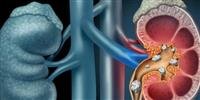
Kidney stones are small masses of salts and minerals that form inside the kidneys and may travel down the urinary tract. Kidney stones range in size from just a speck to as large as a ping pong ball. Signs and symptoms of kidney stones include blood in the urine, and pain in the abdomen, groin, or flank. About 5% of people develop a kidney stone in their lifetime.
What causes kidney stones?
The kidneys regulate levels of fluid, minerals, salts, and other substances in the body. When the balance of these compounds changes, kidney stones may form. There are four types of kidney stones, each made of different substances. Uric acid and cystine are two compounds that may comprise kidney stones. Factors known to increase the risk of kidney stones include dehydration, family history, genetics, and the presence of certain medical conditions. Having one or more family members with a history of kidney stones increases the risk of the condition.
Who is likely to develop a kidney stone?
The rate of people who develop kidney stones is increasing in the U.S. The reasons for the trend are unknown. The prevalence of kidney stones was 3.8% in the late 1970s. In the late 1980s and early 1990s, the number rose to 5.2%. Caucasian ethnicity and male gender are associated with higher rates of kidney stones. Men tend to develop kidney stones in their 40s through 70s rates increase with age. Women are most likely to experience kidney stones in their 50s. A person who has suffered from one kidney stone is likely to develop others.
What are symptoms of kidney stones?
Many kidney stones are painless until they travel from the kidney, down the ureter, and into the bladder. Depending on the size of the stone, movement of the stone through the urinary tract can cause severe pain with sudden onset. People who have kidney stones often describe the pain as excruciating. The lower back, abdomen, and sides are frequent sites of pain and cramping. Those who have kidney stones may see blood in their urine. Fever and chills are present when there is an infection. Seek prompt medical treatment in the event of these symptoms.
How are kidney stones diagnosed?
Kidney stones are diagnosed by excluding other possible causes of abdominal pain and associated symptoms. Imaging tests including an X-ray called a KUB view (kidney, ureter, bladder), or a helical CT scan are often used to confirm the diagnosis of kidney stones. Although the amount of radiation exposure associated with these tests are minimal, pregnant women and others may need to avoid even these low levels of radiation. In these cases, an ultrasound may be used to diagnose the kidney stone.
What is the treatment for kidney stones?
Most people with kidney stones are able to pass them on their own within 48 hours by drinking plenty of fluids. Pain medication can ease the discomfort. The smaller the stone, the more likely it is to pass without intervention. Other factors that influence the ability to pass a stone include pregnancy, prostate size, and patient size. Stones that are 9 mm or larger usually do not pass on their own and require intervention. Stones that are 5 mm in size have a 20% chance of passing on their own while 80% of stones that are 4 mm in size have a chance of passing without treatment.
What is the treatment for stones that do not pass on their own?
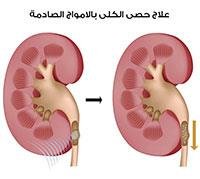
Lithotripsy is a procedure that uses shock waves to break a kidney stone into smaller pieces that can be more easily expelled from the body. The device used for this procedure is called a Lithotripter. Kidney stones can also be removed surgically. A percutaneous nephrolithotomy is a procedure in which a kidney stone is removed via a small incision in the skin. A kidney stone may also be removed with a ureteroscope, an instrument that is advanced up through the urethra and bladder to the ureter.
How can kidney stones be prevented?
The best way to avoid kidney stones is to prevent the most common cause – dehydration. You are adequately hydrated when your urine is clear. Most people require between 8 to 10 glasses of water per day. Avoid grapefruit juice which is linked to the development of kidney stones.