The kidneys filter the blood and excrete waste and excess fluid into the urine. A disorder in the kidney function leads to the accumulation of waste and excess fluid in the body, which causes serious complications. The deterioration in the performance of the kidneys is slow, as no symptoms of the disease are distinguished in its early stages, and the appearance of symptoms increases with the worsening of the condition so f
The disease is only detected in its late stages.
Symptoms of kidney failure
Symptoms of kidney failure include
Decreased urine output.
Nausea and vomiting.
lack of appetite
tiredness and weakness
difficulty sleeping
muscle contraction
Edema, especially in the ankles and legs.
Itch.
It is important to know that these symptoms are not limited to kidney failure, as they may also appear with other diseases.
Causes and risk factors for renal failure
Most of the time, chronic kidney failure occurs as a result of some diseases that prevent the kidneys from performing their function for long periods. Among these diseases, we mention the following:
Diabetes mellitus.
Hypertension.
Prostate gland enlargement.
kidney stones.
Urinary bladder cancer.
Kidney cancer.
Kidney infection.
Some rheumatic diseases, such as lupus, scleroderma, and vasculitis.
Partial or complete blockage of the artery that supplies blood to the kidneys.
Risk factors for chronic renal failure
Risk factors for chronic kidney failure include
heart disease.
smoking.
Obesity.
High levels of cholesterol in the blood.
A family member has kidney disease.
Complications of kidney failure
There are some complications associated with kidney failure, including the following
fluid retention
The ability of the kidney to excrete excess fluid is damaged, causing edema in the extremities and lungs, in addition to a rise in blood pressure.
Arrhythmia
Potassium secretion decreases from the body, which leads to a rapid increase in its levels in the blood, which leads to a severe disorder in the heart rhythm that may lead to death.
Bone fractures
The kidneys work to balance the levels of phosphorous and calcium in the blood, which are vital elements for building bones, and damage to the concentration of these minerals leads to weak bones and increases the possibility of fracture in them.
Anemia
Anemia occurs as a result of a decrease in the hormone erythropoietin, which is secreted by the kidneys, and is responsible for stimulating the bone marrow to produce red blood cells.
Central nervous system injury
Accumulation of toxic substances in the body leads to damage to functional performance, especially in the central system, where the patient suffers from difficulty in concentrating, changes in personality, in addition to the occurrence of seizures.
other complications
They include the following
A decrease in sexual arousal.
Impotence.
Weakened immune system.
Pericarditis.
Diagnosis of kidney failure
There are many ways in which kidney failure is diagnosed, such as the following
blood tests
Through blood tests, it is possible to know the levels of some waste products in the blood, such as: urea and creatinine, in addition to some other substances, such as: calcium, phosphorus, potassium, and sodium, as the levels of these substances reflect the level of kidney performance. .
urine test
Some things may indicate a problem with the kidneys, such as: the presence of certain substances such as proteins in the urine, in addition to a very low concentration of waste in the urine.
Imaging examinations
In some cases, imaging tests are performed to diagnose a tumor or injury, such as ultrasound or computed tomography.
biopsy
A biopsy is done by ing a needle into the body and taking a small piece of kidney tissue. This tissue is examined in the laboratory.
Kidney failure treatment
Chronic renal failure treatment focuses on the cause of the disease to avoid aggravation of the condition, as there is no treatment that helps improve kidney function.
The treatments used can be divided as follows
1. Improved lifestyle
By following the following
Reduce alcohol consumption to a minimum.
Eat as little protein and salt as possible.
Take appropriate medications in case of certain diseases, such as diabetes and blood pressure.
stop smoking.
Maintaining a healthy weight.
Avoid taking some medications that increase kidney toxicity.
2. Pharmaceutical treatments
There are some other treatments that aim to treat the complications of the disease, such as the following:
Some blood pressure lowering medications, such as: Angiotensin converting enzyme - ACE inhibitors, and Angiotensin II Receptor Blockers - ARB.
Cholesterol lowering treatments.
Treatments to raise the level of hemoglobin and treat anemia.
Bone strengthening treatments.
Treatments to get rid of edema.
3. Other procedures
In some cases where there is a significant decrease in kidney function, the following is resorted to:
Dialysis
Where it is performed by medical devices that filter the blood, where the blood is entered through a tube into the device, where it is filtered and then returned to the body again, and this process takes hours and must be done several times a week.
Peritoneal dialysis is performed in other cases, where a solution is introduced into the abdominal cavity, then waste is transferred from the blood into the solution through the peritoneal membrane, then the solution is pumped out of the abdominal space.
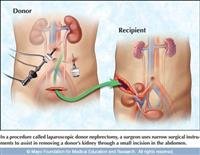
Kidney transplant
Where a new kidney is transplanted into the patient''s body that was donated by a deceased person or a living donor.
Prevention of renal failure
Some methods can be taken to prevent kidney failure, as follows
Maintaining body fitness: This reduces blood pressure and maintains kidney function.
Maintaining blood sugar levels: by doing periodic checks for blood sugar levels.
Maintaining blood pressure levels: by measuring pressure readings periodically, and treating it if there is a rise in it.
Adhering to a healthy diet: preferably low in salt, because salt increases the burden on the kidneys.
Avoid smoking: It is a risk factor that reduces the blood supply to the kidney, and increases the risk of kidney cancer by 50%.
Refrain from using some medications frequently: such as non-steroidal anti-inflammatory drugs (NSAIDS), as they greatly affect the kidneys.
Periodic examinations: This helps to detect any kidney injury at an early stage, which reduces complications that may result.