
Cardiac catheterization is a common medical procedure for diagnosing and treating various heart conditions, but it is not without some side effects. In the following article, we will learn about the side effects after catheterization.
Although diagnostic or therapeutic cardiac catheterization is performed through the skin instead of a surgical incision and under local anesthesia instead of general anesthesia, it may cause side effects ranging in severity from minor problems to serious complications that require immediate intervention.
The possibility of a side effect occurring after the diagnostic catheterization procedure, which is classified as serious, such as: heart attack, stroke, and death does not exceed one percent in general.
What are the side effects after catheterization?
The side effects after the catheterization process are those that occur at the place where the tube is ed under the skin, and among the most common complications after cardiac catheterization are the following:
1. Hematoma
Hematoma can occur in the upper groin area with a large area of skin bruising.
Although most of it begins to dissolve within a few days, compression of the femoral nerve may occur and may take weeks or months to heal.
Patients are instructed to avoid strenuous activities and not to lift heavy objects during the first week after catheterization.
And the bloody collection can extend to the back area, and cause a decrease in pressure and pain in the flank, and treatment in this case is conservative by encouraging rest, lying down, and blood transfusion in cases of necessity.
2. Arteriovenous fistula
This unusual connection between the artery and the vein is a side effect after catheterization, and it causes bleeding at the ion site and needs surgical correction, as this connection can enlarge over time.
3. Pseudoaneurysm
A false aneurysm occurs in the event that a blood group occurs and this group remains in contact with the lumen of the artery. Attention is drawn to the presence of a false aneurysm when there is a pulsating mass at the site of the catheter ion hole.
4. Arterial thrombosis
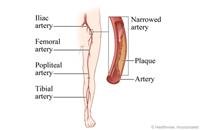
In the event that the catheter was performed through the forearm through the radial artery, the incidence of occlusion in the artery increases to range between 5-19%.
However, in most people, the hand derives its blood supply from the ulnar artery in addition to the radial artery, so this obstruction is not considered clinically significant.
5. Arrhythmias
Various types of heart rhythm and electrical conduction disturbances can occur during catheterization.
One of the most common is premature ventricular contractions, which occur due to ion of the tube into the right or left ventricle, and these contractions are not considered to have any health effect and do not require treatment.
6. A hole in the heart or major blood vessels
Perforation of the wall of the heart or blood vessels is a very rare side effect after catheterization and only occurs in a very small group of patients who have special risk factors.
7. An allergic reaction
Allergic reactions can occur during the catheterization process, either because of the local anesthetic, the coloring matter, or rarely the drug Heparin.
An allergic reaction to the dye occurs in about 1% of patients.
8. Acute renal failure
Acute renal failure following catheterization may result from one of the following reasons
Acute renal failure resulting from the dye, and it was found that its incidence is 7.1% of patients who undergo urgent or elective cardiac catheterization.
The presence of blockage in the arteries of the kidneys.
Renal ischemia during catheterization.
Side effects after catheterization
There are some side effects after the therapeutic cardiac catheterization, which is the catheterization that involves placing a stent or balloon in one of the coronary arteries to prevent blockage, including the following:
1. Metal stent coagulation
Occlusion of the metal meshwork by a blood clot is an uncommon complication that can occur acutely within the first 24 hours, subacute within the first 30 days, or as late as a year or more.
Retinal detachment is most commonly associated with discontinuation of anticoagulant drugs such as aspirin and clopidogrel.
2. Metal stent infection
Metal stent infection is a rare complication that is life-threatening if it occurs, as it affects the wall of the coronary artery and makes it weaker, which affects the heart muscle and may lead to death.
3. Myocardial ischemia
Myocardial ischemia or ischemia often causes chest pain in the patient within the first 48 hours. This acute ischemia is related to factors related to the catheterization procedure itself.
Chest pain may also occur after catheterization without signs of myocardial ischemia, such as elevated cardiac enzymes or changes in the electrocardiogram.
This pain lasts for about 72 hours in 80% of patients and may extend for about two weeks or less in 20% of them.