Important
It is possible that the main title of the report Cholecystitis is not the name you expected. Please check the synonyms listing to find the nate name(s) and disorder subdivision(s) covered by this report.
Synonyms
acalculous cholecystitis
calculous cholecystitis
Disorder Subdivisions
None
General Discussion
Cholecystitis is inflammation of the gallbladder, the pear-shaped muscular sac the lies below the liver. The gallbladder's main function is to store and concentrate bile and to expel bile through the bile duct into the intestine to assist with the digestion of fats. Bile is a greenish-brown liquid produced by the liver that helps to break down fats present in the small intestine during digestion. Cholecystitis may come on suddenly (acute) or may persist over a period of time (chronic).
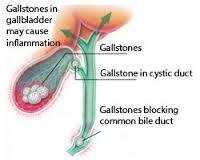
Acute cholecystitis is usually caused by obstruction of the outlet of the gallbladder, which is often due to the development of a stone formed in the biliary tract (gallstone or biliary calculus). Repeated mild episodes of acute cholecystitis may result in chronic cholecystitis, which may be characterized by thickening and shrinking of the gallbladder walls and a resulting inability to store bile. Cholecystitis may cause a variety of symptoms including severe pain in the right side of the abdomen (right upper quadrant) and/or back, nausea, vomiting, indigestion, fever, and persistent yellowing of the skin, mucous membranes, and whites of the eyes (jaundice). In some cases, there may be additional symptoms.