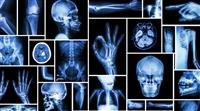

Computed tomography (CT) and magnetic resonance imaging (MRI) give much more detail than plain x-rays and may be done to determine the extent and exact location of damage. These tests can also be used to detect fractures that are not visible on x-rays.
Magnetic Resonance Imaging (MRI)
MRI is especially valuable for imaging muscles, ligaments, and tendons. MRI can be used if the cause of pain is thought to be a severe soft-tissue problem (for example, rupture of a major ligament or tendon or damage to important structures inside the knee joint).
CT is useful if MRI is unavailable or not recommended. CT exposes people to ionizing radiation (see Risks of Radiation in Medical Imaging). CT best images bone compared with other structures. However, MRI is better than CT for imaging some bone abnormalities, such as small fractures of the hip and pelvis. The amount of time a person spends undergoing CT is much less than for MRI. MRI is more expensive than CT and, with the exception of when the open-sided units are used, many people feel claustrophobic inside the MRI unit.