
Hemorrhoids (or hemroids) are also known as piles. Although they can be extremely unpleasant and painful for many people, they can be easily treated and often prevented. As hemorrhoids generally get worse as time goes by, health care professionals say they should be treated as soon as they appear.
At least four-fifths of adults in Europe and North America will experience hemorrhoids at some point in their lives. Doctors say a large number of people who go and have a checkup are found to have hemorrhoids.
The older you are the more likely you are to suffer from hemorrhoids. This does not mean, however, that young people and children do not get them. Hemorrhoids are much more common among men than women. A woman is most likely to get them when she is pregnant.
Contents of this article
What are hemorrhoids?
Symptoms of hemorrhoids
Treatment for hemorrhoids
What you can do on your own
How can I prevent hemorrhoids from appearing in the first place?
You will also see introductions at the end of some sections to any recent developments that have been covered by MNT's news stories. Also look out for links to information about related conditions.
Fast facts on hemorrhoids
Here are some key points about hemorrhoids. More detail and supporting information is in the main article.
Hemorrhoids can be uncomfortable for many people, they are easily treated and prevented.
Hemorrhoids are more common in men than women.
A female is more likely to get hemorrhoids while pregnant.
The likelihood of suffering from hemorrhoids increases as a person ages.
Hemorrhoids occur when the veins surrounding the anus are inflamed.
Occurrence of hemorrhoids can be due to pregnancy, aging, chronic diarrhea, constipation, straining to move a stool, sitting for long periods, anal intercourse, obesity and genetics.
Bleeding occurring in the anal area, itching, discomfort, swelling may indicate hemorrhoids.
A doctor can carry out tests to confirm if you have hemorrhoids.
In most cases patients can take simple measures to alleviate symptoms while the problem heals on its own.
Sometimes medicines and surgery are needed to treat hemorrhoids.
What are hemorrhoids?
When the veins around the anus or in the rectum are swollen or inflamed the patient has hemorrhoids. They can occur for the following reasons:
Pregnancy
Aging
Chronic diarrhea
Chronic constipation
Straining to move stool (related to the previous one)
Sitting for long periods (especially sitting for long periods at a time in the toilet)
Anal intercourse
Obesity
Genetics - some people inherit a tendency to develop hemorrhoids.
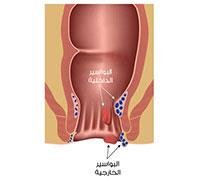
Hemorrhoids can occur both inside and above the inside of the anus. They can also appear externally, under the skin of the anus.
Internal and external hemorrhoids
Symptoms of hemorrhoids
Symptoms are hemorrhoids include
Bleeding, usually painless. The patient may notice red on the toilet paper or in the toilet bowl
Itching or irritation in the anal area
Discomfort and pain in the anal region
Lumps protruding from the anal region
Swelling in the anal region
A lump near your anus, this can sometimes be sensitive (painful)
Feces may leak (without your wanting it to happen).
Internal hemorrhoids, which lie inside the rectum, usually have no symptoms; the patient is not aware of them as they do not generally cause any discomfort. However, straining when passing a stool may cause them to bleed. Straining can also push an internal hemorrhoid so that it protrudes through the anus this is called a protruding or prolapsed hemorrhoid and can be painful.
When a patient has external hemorrhoids they will lie under the skin around the anus. They can become very itchy and may bleed. Sometimes the blood may accumulate and form a thrombus (clot), which can be painful the area will swell and become inflamed.
When should I see my doctor?
If you experience any of the symptoms related to hemorrhoids it would be advisable to contact your doctor. Bear in mind that rectal bleeding can be caused by other things, including colorectal and anal cancers. It might be a mistake to assume that anal bleeding is simply the result of hemorrhoids and, because of this, decide not to see a doctor.
Your doctor can carry out a physical examination and perform other tests to determine whether or not you have hemorrhoids. If your hemorrhoids do not improve, even after using home remedies, you should see your doctor.
If your symptoms started with a significant ation in bowel habits, or if your stools are very dark or even black, if there are blood clots or blood mixed in with the stools, you should see a doctor immediately so that they can determine whether your bleeding is taking place in another part of your digestive tract.
If your symptoms include large amounts of bleeding, dizziness and a sensation that you are going to faint you should immediately seek emergency care.
Hemorrhoids - four surgical classifications
First degree hemorrhoids - these bleed but do not protrude outside the anus
Second degree hemorrhoids - these protrude (prolapsed) outside the anal canal when the patient is passing a stool, and then draw back immediately
Third degree hemorrhoids - these need to be manually placed back inside the anal canal after protruding (prolapsing)
Fourth degree hemorrhoids - the protruding (prolapsing) hemorrhoids cannot be manually replaced. The tissue is thrombosed or strangulated.
Treatment for hemorrhoids
In the majority of cases the patient can take some simple measures which will alleviate symptoms while the problem gets better on its own. However, medicines and even surgery may sometimes be needed.
Medicines
Most hemorrhoid medicines are OTC (over-the-counter); this means you do not need a doctor's prescription to get them. They include ointments, pads or suppositories. Such active ingredients as hydrocortisone and witch hazel are known to relieve itching and pain. These medicines should not be used for more than about seven days (unless your doctor has told you otherwise).
Simple incisions
Your doctor may carry out a simple incision if a clot has formed around an external hemorrhoid. These incisions are usually effective. More continuous bleeding may require rubber band ligation, sclerotherapy (injection) or coagulation.
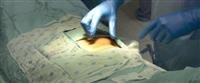
Surgery to treat hemorrhoidsHemroid surgery
Specialist ultrasonic device for hemorrhoid surgery.
Surgery is recommended if the patient has not benefited from the simple procedures, or if the hemorrhoids are very large. In some cases the patient may go home straight after the procedure, while in others they may have to be hospitalized. Surgery may involve hemorrhoidectomy or stapling.
The method shown on the right is a gentle method of hemorrhoidal ligation (HAL: Hemorrhoidal Artery Ligation, or RAR: Recto Anal Repair). It locates the main branch of the artery by means of ultrasound loops, with a curved needle tightly threading around the artery and pulling it together. This is called a minimally invasive treatment method and is described as being painless.
What you can do on your own
There are things you can do to relieve the symptoms. Bear in mind that they will not eliminate the hemorrhoids.
Topical creams and ointments - you can apply an OTC cream or suppository which contains hydrocortisone. There are also pads which contain witch hazel, or a topical numbing agent
Bathing the affected area - bathe gently with warm water. Do not use soap if you think it will make the problem worse. Dry the area gently with a hair drier after bathing
Ice packs and cold compresses - if you apply these to the affected area it may help with the swelling
Sitz bath. Use warm water - the sitz bath is placed over the toilet. Some pharmacies sell them
Use moist towelletes - dry toilet paper may aggravate the problem
Analgesics - some painkillers, such as aspirin, ibuprofen and paracetamols (Tylenol) may alleviate the pain and discomfort.
How can I prevent hemorrhoids from appearing in the first place?
If your stools are always soft your chances of developing hemorrhoids are greatly reduced. You can prevent hemorrhoids in the following ways:
Nutrition: if you eat lots of fruits and vegetables, as well as whole grains, your stools will nearly always be soft. If you drink plenty of fluids your stools are more likely to be soft (this does not include alcohol)
Straining: when you go to the toilet try not to strain or hold your breath, as this s pressure in the veins in the lower rectum
Go when you need to: if you have the urge to go to the toilet, go. Do not wait. The longer you wait, the drier the stools will be
Be physically active: physical inactivity, sitting or standing still for long periods puts pressure on the veins
Keep your bodyweight down: obesity an overweight significantly raise a person's risk of having hemorrhoids.