
What is lymphoma?
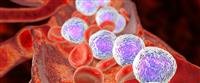
Lymphoma is cancer of the lymph system (or lymphatic system), which is part of our immunity. It is characterized by the formation of solid tumors in the immune system.1 The cancer affects immune cells called lymphocytes, which are white blood cells.
Statistics from the US National Cancer Institute estimate that there are nearly 20 cases of non-Hodgkin's lymphoma for every 100,000 people in the American population.2
Hodgkin's lymphoma, meanwhile, is relatively rare, with around three cases in every 100,000 people.3
About 90% of lymphomas are the non-Hodgkin's type while about 10% are Hodgkin's.1
Cancer is a group of over 100 diseases, all of which start with the growth of abnormal cells. Instead of dying in the normal cell life cycle, cancerous cells continue to divide into new abnormal cells, and grow out of control.4
Lymphatic cancers are classified by the type of immune cells affected.
In non-Hodgkin's lymphoma, B-cells and T-cells are affected - both being types of lymphocyte white blood cell with special roles in immunity. In the US, B-cell lymphomas are much more common than T-cell ones.5
In Hodgkin's lymphoma, the cancer cells are usually an abnormal type of B lymphocyte, named Reed-Sternberg cells. There are many subtypes of Hodgkin's lymphoma, typed by differences seen under the microscope - but a very high percentage of cases are classed as "classic" Hodgkin's.6
The short YouTube video below, produced by the American Society of Hematology, shows how lymphoma develops.
Types of lymphoma
There are many different types of lymphoma depending on the type of lymphatic cells affected.
Hodgkin's lymphoma can occur at any age, affects more men that women and the majority will be completely cured.
Hodgkin's lymphoma is diagnosed when a special type of cell, the Reed-Sternberg cell, is seen under the microscope.5
Non-Hodgkin's lymphoma accounts for all the other types of lymphoma. These can be high grade or low grade and the treatment and prognosis varies.6
What causes lymphoma?
For most cancers, researchers are still trying to understand how they are caused. The same is true for lymphoma - doctors do not know what causes it, although it is more likely to occur in certain people.5,7,8
Medical researchers have identified certain risk factors that make lymphoma more likely, although they often do not understand why:5,8
Non-Hodgkin's lymphoma
Age - most non-Hodgkin lymphomas are in people 60 years of age and over
Sex - there are different rates of different types of non-Hodgkin's lymphoma across the sexes
Ethnicity and location - in the US, African-Americans and Asian-Americans are less prone than white Americans, and the disease is more common in developed nations of the world
Chemicals and radiation - some chemicals used in agriculture have been linked, as has nuclear radiation exposure
Immune deficiency - for example, caused by HIV infection or in organ transplantation
Autoimmune disease, in which the immune system attacks the body's own cells
Infection - certain viral and bacterial infections increase the risk. The Helicobacter Infection has been implicated, as has the Epstein Barr Virus (the virus that causes glandular fever)13
See the American Cancer Society's page for more detail on risk factors for non-Hodgkin's lymphoma.
Hodgkin's lymphoma
Infectious mononucleosis - infection with Epstein-Barr virus
Age - two specific groups are most affected: typically people in their 20s, and people over the age of 55 years
Sex - slightly more common in men
Location - most common in the US, Canada and northern Europe; least common in Asia
Family - if a sibling has the condition, the risk is slightly higher, and very high if there is an identical twin
Affluence - people from higher socioeconomic status are at greater risk
HIV infection
See the American Cancer Society's page for more detail on risk factors for Hodgkin's lymphoma.
Recent developments on causes of lymphoma
Poorly controlled celiac disease could increase lymphoma risk
Research published in the Annals of Internal Medicine found that certain patients with celiac disease were at higher risk of lymphoma.
Gut bacteria linked to lymphoma
Research published in The Journal of Cancer Research found links in a study of mice between certain make-ups of gut bacteria and lymphoma survival rates, opening up the possibility of preventive measures.
Signs and symptoms of lymphoma
The symptoms and signs of lymphoma are very similar to those of simple illnesses such as viral illnesses and the common cold, and this can cause problems with delayed diagnosis.
The difference is that the symptoms of lymphoma persist long after the usual run of a viral infection.
Lymph nodes
The lymph nodes in the neck can become swollen during a cold or flu. There are many other nodes around the body.
The symptoms typically involve painless swelling of the lymph nodes (glands), often in the neck or armpits where these nodes are concentrated. Swelling may also occur in the groin and abdomen, although some people do not experience any detectable swelling in any part of the body.10
You may be familiar with this sign because the lymph nodes in the neck (commonly referred to as "glands") can become swollen during infections such as the cold - but here the swelling subsides, whereas it does not in cancer.6
The enlarged glands can press on organs, bones and other structures causing pain, but this pain can be similar to that of other less serious causes (such as simple backache), again making lymphoma an easy diagnosis to miss.
Anyone who has swelling of the glands, and does not get better after a short time, should see their doctor.
The lymph nodes, part of the immunity's lymphatic system, are found all around the body, but their swelling in lymphoma is noticeable.7,9,10
Other symptoms that can be experienced by people with lymphoma include the following:9,11
Swelling in the legs or ankles
Cramping and bloating of the abdomen
Night sweats and fever
Weight loss and loss of appetite
Chills
Unusual itching
Fatigue
Pain or ed sensation
Loss of appetite
Unusual tiredness/lack of energy
Persistent coughing
Breathlessness
Enlarged tonsils
Headache.
Painful symptoms are not normally seen in the early stages of lymphoma. In fact, swollen and painful lymph nodes accompanied by other signs of infection are usually a sign of active infection.
Painless swelling of the lymph nodes is much more common in lymphoma, with pain, weakness, paralysis, or otherwise ed sensation typically occurring only when an enlarged lymph node is pressing against spinal nerves or the spinal cord.
Anyone experiencing any of these symptoms should seek immediate medical attention.
Some people may also experience lymph node pain after drinking alcohol.
Lymphoma is a type of cancer that originates in the lymph nodes, but it can spread rapidly to other parts of the body through the lymphatic system. As cancerous lymphocytes spread into other tissues this can decrease the body's ability to fight infection.
Lymphoma can result in a number of different symptoms, many of which could signal numerous other conditions. It is always worthwhile presenting any symptoms to a doctor.
Spread of lymphoma
Hodgkin's lymphoma is a cancer of the lymphocytes, a type of white blood cell. This type of cancer affects the lymph nodes and, as lymphatic tissue is connected throughout the body, this gives the cancer cells an easy way of traveling from their original location to spread to other tissues, including those outside of the lymphatic system.10
In Hodgkin's lymphoma, this spread usually occurs in a sequential fashion, affecting one lymph node after another in order
In non-Hodgkin's lymphoma, tumors may arise in disparate lymph nodes, skipping some nodes.
Lymphoma tests and diagnosis
There is currently no active screening program for lymphoma, so it is only diagnosed when the person goes to their doctor with something that is concerning them. Because of the vagueness of the symptoms, doctors often reassure early cases of lymphoma, thinking that they are simple infections.12
If symptoms persist, patients should go back to their doctor.
Doctors may investigate lymphoma when a patient presents the signs and symptoms.
They will start investigating lymphoma by "taking a history" - asking questions to help rule out other explanations for the symptoms. This will narrow down:5,6
Possible risk factors
Family history
Other medical conditions.
A physical examination will follow for all cases of suspected lymphoma - palpating areas of the body where any swollen lymph nodes may be felt. The doctor may also feel around the abdomen to examine the spleen and liver.5,6
During the physical examination, the doctor will look out for signs of infection near lymph nodes, since most cases of swelling can be explained by this.5,6
The doctor will look for swollen lymph nodes in a number of areas, including the
Chin
Neck
Tonsils
Groin
Axillae (armpit)
Shoulders
Elbows.
Classifying lymphoma
Classification is a complicated process, but it helps surgeons and physicians to determine the best course of action for treating (or not treating) the cancer.
A number of different classification systems have been proposed over recent years, with the most commonly used system devised by the World Health Organization (WHO). This lymphoma classification system helps physicians to standardize how they discuss lymphoma.
Grading lymphoma
After classification, the clinical grade of the lymphoma also needs to be determined. This describes how aggressive the tumor is and predicts how the tumor will behave.7-9
The pathologist will take into account
The type of cells present in the biopsy
The function and growth rate of those cells
Any unique characteristics observed in the cells, and other factors
A low-grade lymphoma is one that is slow growing (sometimes referred to as indolent), while an intermediate or high-grade lymphoma is fast growing and aggressive.
Types of indolent lymphoma include
Follicular lymphoma
Small lymphocytic lymphoma
MALT lymphoma
Nodal marginal zone B-cell lymphoma
Lymphoplasmacytic lymphoma
Anaplastic large cell lymphoma, primary cutaneous type (this can also be an aggressive lymphoma).
The most common type of aggressive lymphoma is diffuse large B-cell lymphoma (DLBC). Other forms of aggressive lymphoma include:
Burkitt lymphoma
Lymphoblastic lymphoma
Hepatosplenic gamma/delta T-cell lymphoma
Subcutaneous panniculitis-like T-cell lymphoma
Enteropathy-type intestinal T-cell lymphoma
Adult T-cell lymphoma/leukemia (HTLV 1+)
Anaplastic large cell lymphoma, primary systemic type
Aggressive NK-cell leukemia.
Biopsy laboratory tests
If lymphoma is suspected - because, for example, the swelling has persisted after infection has been ruled out - the diagnosis can be definitively confirmed by biopsy, which involves laboratory examination of lymph tissue under a microscope.5,6
Biopsy testing can also confirm the particular type of lymphoma, and so provide a guide to prognosis and treatment.5,6
The most common forms of biopsy procedure are:5,6
Excisional biopsy - the surgeon cuts through the skin to remove an entire lymph node for analysis
Incisional biopsy - the surgeon removes only part of a large suspected lymph tumor.
Ultrasound neck scan
Lymph node tumors can be imaged by ultrasound scan.
The operations, depending on the location, will involve using either local anesthetic, sedative or general anesthetic.
Less often, doctors may be guided by a less invasive biopsy procedure using needles - known as fine needle biopsy or core needle biopsy.5,6
Other tests that may be ordered are blood tests to check the number of white blood cells, for example, and chest X-rays to pick out swollen lymph nodes.12
If a lymphoma diagnosis has already been confirmed by biopsy, further testing is carried out to determine the stage of the cancer, to see whether it has spread (metastasized) to other parts of the body.
Staging tests include a choice from the following, depending on the case:5,6,11,12
Blood tests - including complete blood count (CBC), white blood count, protein levels, liver function tests, kidney function tests, uric acid level, inflammatory markers and lactate dehydrogenase (LDH) level.
Biopsy - a sample of cells is taken from the blood and looked at under a microscope. The results of a biopsy are key to the diagnosis and classification of lymphoma. A biopsy can reveal whether a tumor originated from B-cells or T-cells, with the former being much more common. The biopsy will also help a pathologist determine the classification, or type, of non-Hodgkin's lymphoma that is present
CT (computed tomography X-ray imaging) scans of the chest, abdomen, and pelvis, sometimes using a contrast, to check for tumors
MRI for detailed images of tissues
Ultrasound scanning for tumors
PET (positron emission tomography) scan, in which radioactive tracers pick out cancer
Bone marrow biopsy in some cases, to check for lymphoma cells in the sample
Spinal tap - a long, thin needle is used under local anesthetic to remove some spinal fluid, which is tested for lymphoma.
The testing regime enables the cancer team to understand the type and stage of cancer. Oncologists use staging systems for all types of cancer. In lymphoma, four stages are described - from I to IV, with each corresponding to the cancer's spread.
The following are basic descriptions of each stage:19
Stage I - the tumor is localized, confined to one area
Stage II - there is limited spread of the lymphoma, remaining on one side of the diaphragm
Stage III - there is regional spread of the cancer to either side of the diaphragm, or to an area or an organ near the primary lymph node tumor
Stage IV - the lymphoma has spread beyond the lymphatic system to distant parts of the body.
The stage is given a further description according to the particular symptoms displayed, with either A or B added to the number. The B-denoted cancer is usually more advanced than A and is characterized by the following symptoms (without these symptoms, the lymphoma is denoted A):
Unexplained weight loss of more than 10% over the previous 6 months
Unexplained fever of at least 100.4°F (38°C)
Drenching night sweats.
Treatment and prevention
A number of treatment options are used against lymphoma, many of which are common to other types of cancer.
While statistics cannot predict the success of an individual person's treatment plan, which depends on numerous factors, including the stage of the cancer, the figures do show good overall success rates in beating lymphoma:2,3
More than two-thirds of people diagnosed with non-Hodgkin's lymphoma will survive for five years
The five-year survival rate is even higher for the rarer Hodgkin's lymphoma, at just over 85%.
Non-Hodgkin's lymphomaChemotherapy drug being held by Doctor
Chemotherapy can often be combined with radiotherapy and immunotherapy for intensive treatment.
An indolent non-Hodgkin's lymphoma often causes few, if any, symptoms until quite late in the disease, when it has already become widespread. This means that treatment typically takes the form of watchful waiting, followed by medical intervention to help shrink the tumors
Treatment is usually effective and leads to a period of remission, where the patient is free from the disease
Indolent (low-grade) lymphoma may relapse though, requiring further treatment. In some cases, an indolent lymphoma can become aggressive, which necessitates more aggressive treatment
Typically people with indolent lymphoma live for a long time and have a good quality of life
Some people may not require any treatment
In contrast, patients diagnosed with a high-grade or intermediate lymphoma will typically require immediate and intensive treatment to help slow down tumor growth and, eventually, to shrink the tumor
Where indolent lymphoma turns into aggressive lymphoma this can be especially difficult as the tumors may be widespread, whereas an aggressive lymphoma may be caught earlier and still be somewhat localized.
Hodgkin's lymphoma
Treatment for Hodgkin's lymphoma also depends on the grade of the cancer
Unlike non-Hodgkin's lymphoma, however, treatment for early stage Hodgkin's lymphoma usually takes the form of a short course of chemotherapy followed by field radiation to treat the affected lymph nodes
This offers systemic and localized cancer treatment, but helps minimize damage to healthy tissue
Treatment for later-stage Hodgkin's lymphoma typically comprises combination chemotherapy to shrink widespread tumors.
In addition to watchful waiting, chemotherapy, and radiation therapy, lymphoma treatment may also take the form of:
Biologic therapy
Antibody therapy
Stem-cell transplantation
Splenectomy
Steroid treatment
Radioimmunotherapy
Surgery.
Man receiving radiation therapy
Radiotherapy treatment
Radiotherapy, or radiation therapy, involves directing a carefully focused beam of high-energy X-rays onto lymphomas, thereby destroying the cancerous cells.
Immunotherapy is the use of biological drug therapies that boost the immune system or provide artificial versions of normal parts of the immune system. Again, the aim is to kill cancer cells or slow their growth.5,6
Some drugs are monoclonal antibodies - manmade immune proteins - and several of these drugs are available against lymphoma.
For non-Hodgkin's lymphoma, other biological drugs may be tried in some cases, or after other treatments have failed. These include interferon, and the immunomodulating agents thalidomide and lenalidomide.5,6
A small number of lymphoma cases are treated by stem cell transplantation. This is a process that allows high-dose chemotherapy, and sometimes high-dose radiotherapy, to be given in cases that have not responded to standard treatment.
High-dose treatment would usually cause unacceptable bone-marrow side-effects, but the stem cell transplant given after treatment restores damaged bone marrow. Infusion of blood-forming stem cells means that this function is not lost, and new blood cells can still be d.
Prognosis for lymphoma
When diagnosing Hodgkin's lymphoma, physicians will not only classify and grade the cancer, they also assign either "A" or "B" to the stage of the disease.
"B" means that at least one of the following symptoms is present: unintentional weight loss, night sweats, or fevers
"A" grade means that these symptoms are not present.
Based on the classification, aggressiveness, and stage of the lymphoma, a physician will calculate the "International Prognostic Score for Hodgkin's lymphoma". This score also takes into account the patient's age and other information. Patients can ask for their prognosis based on these calculations.
The Leukemia and Lymphoma Society note that Hodgkin's lymphoma is considered to be one of the most curable forms of cancer.
The five-year relative survival rate for people with Hodgkin's lymphoma has more than doubled, from 40% in whites from 1960 to 1963 (only data available) to 87.7% for all races from 2004 to 2010
The five-year relative survival rate is 93.7% for all people with Hodgkin's lymphoma who were less than 45 years old at diagnosis
The five-year relative survival rate for people with non-Hodgkin's lymphoma has risen from 31% in whites from 1960 to 1963 (only data available) to 71.4% for all races from 2004 to 2010
Early diagnosis and appropriate treatment has helped to improve survival rates for lymphoma.
An estimated 20,170 members of the US population die from lymphoma (18,990 non-Hodgkin's lymphoma and 1,180 Hodgkin's lymphoma) each year. Overall, death rates have been declining for people with Hodgkin's lymphoma since 1975.
All cancer treatments produce side-effects, many of which are serious. Treatment plans always involve weighing up the balance of treatment aims against potential adverse events. The benefits of treatment should outweigh any risks.