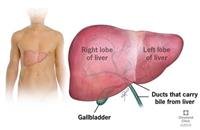

Liver failure is a syndrome that results from a severe decline in the functioning of the liver after a large part of it has been damaged.
Liver tissue is damaged and replaced by scar tissue known as cirrhosis. When liver damage occurs very quickly, liver failure develops rapidly and can cause death within a few days.
Liver failure is a disease that progresses either at a slow or fast pace.
Symptoms of liver failure
Symptoms of liver failure include the following
Bleeding from esophageal varices, which appears in the form of vomiting blood or black stools, and this symptom poses a threat to the patient''s life as a result of portal hypertension.
Excessive abdominal distension impeding movement and breathing, caused by fluid accumulation in the abdomen, as well as portal hypertension, and this accumulated fluid may become infected and cause auto-inflammation of the peritoneum (Peritoneum).
sleep disturbances
Changes in the patient''s personality, confusion, tremors and loss of consciousness, these are all the result of a hepatic encephalopathy, known as hepatic encephalopathy, which is caused by toxic substances that the affected liver cannot secrete and eliminate.
Jaundice, yellowing of the sclera and skin. Jaundice is caused by bilirubin, which is a yellow substance that accumulates in the body due to an imbalance in its excretion through the liver to the gallbladder.
Itching spreads throughout the body, continuously, and is also the result of the accumulation of a substance that has not yet been determined with certainty.
cirrhosis symptoms
The onset of cirrhosis is often quite calm so that the patient does not have any symptoms or problems, but as the disease progresses, the following may be felt:
Weakness.
the disease.
Anorexia.
nausea
Weight loss.
muscle atrophy.
Decreased libido and sexual performance.
Causes and risk factors for liver failure
All factors that damage the liver can cause liver failure, especially if the damage is strong enough.
The most common causes are
Excessive alcohol consumption.
Hepatitis B and hepatitis C viruses.
Some medications, especially paracetamol, are the most common cause of very rapid liver failure.
risk factors
Factors that increase the risk of infection include
Autoimmune hepatitis (Autoimmune Hepatitis).
Bile duct obstruction.
Primary biliary cirrhosis.
Sclerosing cholangitis.
Obstruction of the veins of the liver, such as: Budd Chiari syndrome.
Nonalcoholic steatohepatitis.
Congenital diseases, such as: Wilson''s disease and hemochromatosis.
Complications of liver failure
Complications of liver failure
Hepatocellular carcinoma.
Increased fluid in the brain.
Epileptic seizures.
liver failure
Diagnosis of liver failure
The diagnosis of liver failure depends on the following
Signs and symptoms from the patient''s history (anamnesis).
Signs from the results of the physical exam In a physical exam, your doctor looks for some of the symptoms listed above.
Blood tests show small amounts of proteins that are produced only by the liver, such as: blood clotting factors and albumin, high levels of bilirubin, and high levels of the aminotransferase enzyme, which indicates inflammation and damage to liver cells.
Blood tests aimed at detecting the cause of the disease, such as: a test to determine the hepatitis viruses, checking the percentage of paracetamol in the blood and others.
Imaging tests, particularly computed tomography (CT) scans and ultrasounds, show abnormal liver size and tissue.
biopsy
Liver failure treatment
The treatment of chronic liver failure differs from acute liver failure as follows
1. Treatment of chronic liver failure
The treatment of chronic liver failure is related to changing the lifestyle as follows
Stay away from drinking alcohol.
Reduce your intake of meat, eggs, and cheese.
Weight Loss.
Control of high blood pressure and high blood sugar.
Reducing salt intake.
In the advanced stages of the disease, diet is of great importance. For example, the amount of protein should be carefully adjusted, because too much of it causes brain damage, while a small amount causes muscle atrophy and weakness. In addition, sodium should be low as part of the treatment of fluid retention. It is also important to exercise extreme caution when taking medications, including native medicine preparations, as these products can lead to hepatitis.
2. Treatment of acute liver failure
Treatment for acute liver failure is as follows
Intravenous medication to lower high blood pressure.
diuretics
Monitor blood sugar levels.
3. Treatment of the final stages of liver failure
In the final stages of liver failure, the only treatment that can prevent death is a liver transplant.
In recent years, liver support systems are being developed in a large number. These systems are intended to remove toxic substances accumulated in the body, and some of them are also supposed to carry out biosynthesis by hepatocytes of porcine origin, or of human origin contained in the system.
There is not yet a system that can replace the liver and carry out its functions, but the hope of reaching such a system is great so that the patient can be kept alive until his liver is healed or until he finds a suitable liver to be transplanted.
Prevention of liver failure
Ways to prevent liver failure
Take hepatitis B vaccines.
Refrain from drinking alcohol.
Maintain an ideal weight.
Regular check-ups.
Alternative therapies
Treatment depends on the causative agent of liver failure and its stage of development, and the goals of treatment are to remove the pathogen in the liver, prevent complications and treat the complications that have arisen.
Important examples of pathogen removal are
Quit drinking alcohol.
Medicines against hepatitis viruses, such as: Interferon.
A treatment for suppressing the immune system.