
and hemiplegia?
Stroke is one of the diseases that cause paralysis in people with it. In this article, you will learn about the relationship between stroke and hemiplegia.
Stroke is associated with hemiplegia, with the National Stroke Association reporting that hemiplegia affects 9 out of 10 stroke survivors to varying degrees.
In this article, we will learn about the relationship between stroke and hemiplegia.
What is the relationship between stroke and hemiplegia?
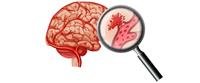
Stroke is a serious medical condition that occurs when blood flow to part of the brain is interrupted or reduced, preventing brain tissue from getting oxygen and nutrients, and brain cells begin to die.
Stroke occurs for two main reasons, which are as follows
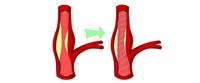
Ischemia: The blood flow stops due to the occurrence of a blood clot, and it constitutes 85% of cases.
Bleeding: where the small blood vessels feeding the brain rupture.
A temporary interruption of the blood supply can also cause a transient ischemic attack, which leads to a temporary stroke, lasting a few minutes and up to 24 hours.
The stroke is mainly associated with the occurrence of paraplegia in most of the survivors, as hemiplegia is defined as a neurological condition that leads to the loss of the ability to move one side of the body to varying degrees, and is also associated with the difficulty of performing daily activities.
This relationship between stroke and hemiplegia is due to injury to the parts of the brain that control the movement of the limbs, face and body, which leads to the patient losing the ability to control muscle movement.
The location of the stroke is related to the location of the paralysis in the body, where paralysis occurs on the other side of the body in which the brain was damaged, as follows:
A stroke in the left side of the brain responsible for controlling language, memory, and speaking causes weakness on the right side of the body.
A stroke in the right side of the brain is associated with weakness and paralysis in the left hemisphere that controls behavior and nonverbal communication.
Symptoms of stroke and hemiplegia
After we have learned about the relationship between stroke and hemiplegia, we will mention their main symptoms as follows:
1. Symptoms of a stroke
Because of the death of brain cells, the occurrence of a stroke is associated with many symptoms, such as:
difficulty walking
headache
Vision and vision problems.
Problems speaking and understanding what others are saying.
Paralysis or numbness of the face, arm and leg.
Dizziness, loss of balance and concentration.
2. Symptoms of hemiplegia
Symptoms associated with hemiplegia include
difficulty walking
muscle fatigue
loss of balance
Inability to grasp things.
Low accuracy of movement.
Complete or partial loss of sensation on one side of the body.
Changes in cognition and mood.
difficulty speaking
Changes in the healthy side of the body due to muscle atrophy or persistent pain due to spasms.
Convulsions, muscle weakness and stiffness.
Hemiplegia is a permanent condition, that is, it cannot be cured and it cannot go away with time, but it is a non-progressive condition, that is, it cannot progress to the worse and its effects can be minimized.