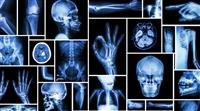

Bone scanning (a type of radionuclide scanning) is an imaging procedure that is occasionally used to diagnose a fracture, particularly if other tests, such as plain x-rays and computed tomography (CT) or magnetic resonance imaging (MRI), do not reveal the fracture. Bone scanning involves use of a radioactive substance (technetium-99m–labeled pyrophosphate) that is absorbed by any healing bone. The procedure can also be done when a bone infection or a tumor that has spread from a cancer elsewhere in the body is suspected.
Although a bone scan may show a problem in the bone, it may not show whether the problem is a fracture, tumor, or infection. The radioactive substance is given by vein (intravenously) and is detected by a bone-scanning device, which s an image of the bone that can be viewed on a computer screen.